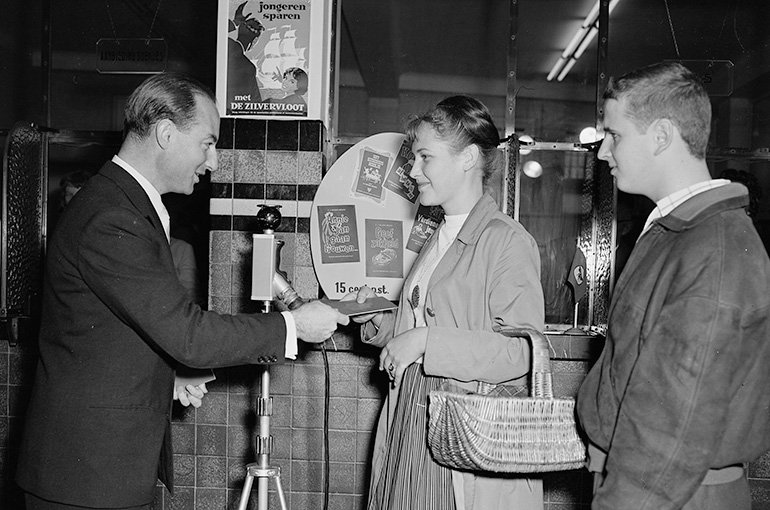
You received money for your birthday, or earned a little from a part-time job. You could spend it straight away, but at home someone might suggest something else: put some into your Zilvervloot account. It would be worth more to you later.
For a teenager, later was a vague idea. You could play a new record today; perhaps you had been thinking about a moped for months. An account that required years of patience took a different sort of imagination. Yet this Dutch savings scheme had a persuasive incentive: meet the conditions, and the government would pay you a bonus at the end.
The government chipped in
The Zilvervloot was linked to the Dutch Youth Savings Act, introduced in 1958. The Netherlands was still rebuilding after the war. Saving was considered sensible and virtuous: you put money aside before making a major purchase. The government wanted young people to develop that habit, and offered a financial reward.[1]
Young people aged fifteen to twenty inclusive could enter into a youth savings agreement. The usual saving period was six to nine years. You did not have to start at fifteen, and payment was not automatically tied to everyone's twenty-first birthday.[2]
The famous 10 per cent was a one-off bonus at the end of the saving period. The bank also paid interest. This was not an account that paid 10 per cent interest every year.
The precise conditions changed over time. For agreements made up to and including 1986, accrued interest was also included when calculating the bonus. For agreements from 1987 onwards, the bonus was calculated on deposits alone.[3]
A passbook with a future inside
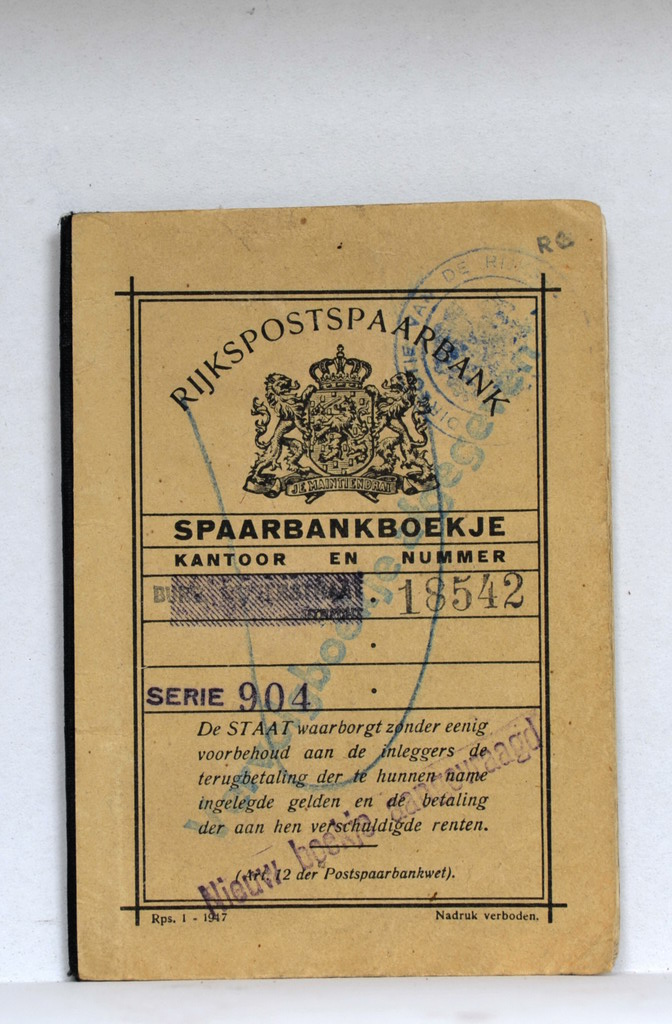
Saving in those days often meant having a passbook. You could open it and see how much money you had put away. Each new entry increased the amount on paper, even if the growing balance made little difference to your everyday life.
A book like that might be kept among the important papers at home. You did not need it every day, but it represented something that belonged to you. Money that was no longer in your wallet, and could not quietly disappear during an afternoon in town.
The Zilvervloot gave saving a direction. This was money for the time when you would stand on your own feet. Driving lessons, an education or furnishings for a first room were possible goals. You did not need to know exactly what you were saving for. That could become clear later.

Forty guilders a month
There was a limit to the annual deposits eligible under the scheme. Initially it was 200 Dutch guilders. In 1966 the maximum rose to 300 guilders, and in 1976 to 480 guilders.[4]
That last amount worked out at forty guilders a month. It was a manageable target on paper, but you still had to find the money. How easy that was depended on your earnings and whether your parents could help.
As an example, putting aside 480 guilders a year for six years produced deposits totalling 2,880 guilders. A 10 per cent bonus on those deposits added 288 guilders. Ordinary bank interest came on top; for the older agreements, that interest also counted towards the bonus.
The appeal was not just the extra money. The annual limit turned a large ambition into a smaller goal: try to save the full amount this year.
Leave it alone: that is for later
The other side of the bargain was waiting. The scheme encouraged people to put money aside for a substantial period. As a rule, the ordinary bonus required at least six complete saving years. Exceptions existed, including provisions relating to marriage.[5]
If you were short of money for something you wanted, you might therefore look at a balance you could not simply use without affecting your bonus. The distinction between money for now and money for later became very real.
For a family with little room in the household budget, regular saving was harder than for a family that could contribute every year. Even a scheme designed to help young people could not remove that difference.
But those who persevered watched small amounts grow into something larger. By the time the account was completed, their plans might have changed. The moped was forgotten; now there was a room to furnish. Their savings had grown up with them.
The end of the original Zilvervloot
The Youth Savings Act was repealed with effect from 1 January 1992. No new agreements eligible for the government bonus could be made from then on. Existing savers retained their acquired bonus rights, so the Zilvervloot did not end for everyone on the same day.[5]
The government's view was that banks now offered enough different savings products and that young people's financial circumstances had changed. It also wanted greater control over spending on the bonus scheme.[1]
The name later returned in commercial children's savings products. These had their own conditions and any bonus was provided by the bank. They did not continue the old government bonus.[6]
The original Zilvervloot belongs to a time when saving had a tangible presence. A passbook put safely away. A balance that slowly increased. And somewhere in the future, the moment when you could say: I saved for years for that.