‘At the next tone, the time will be…’
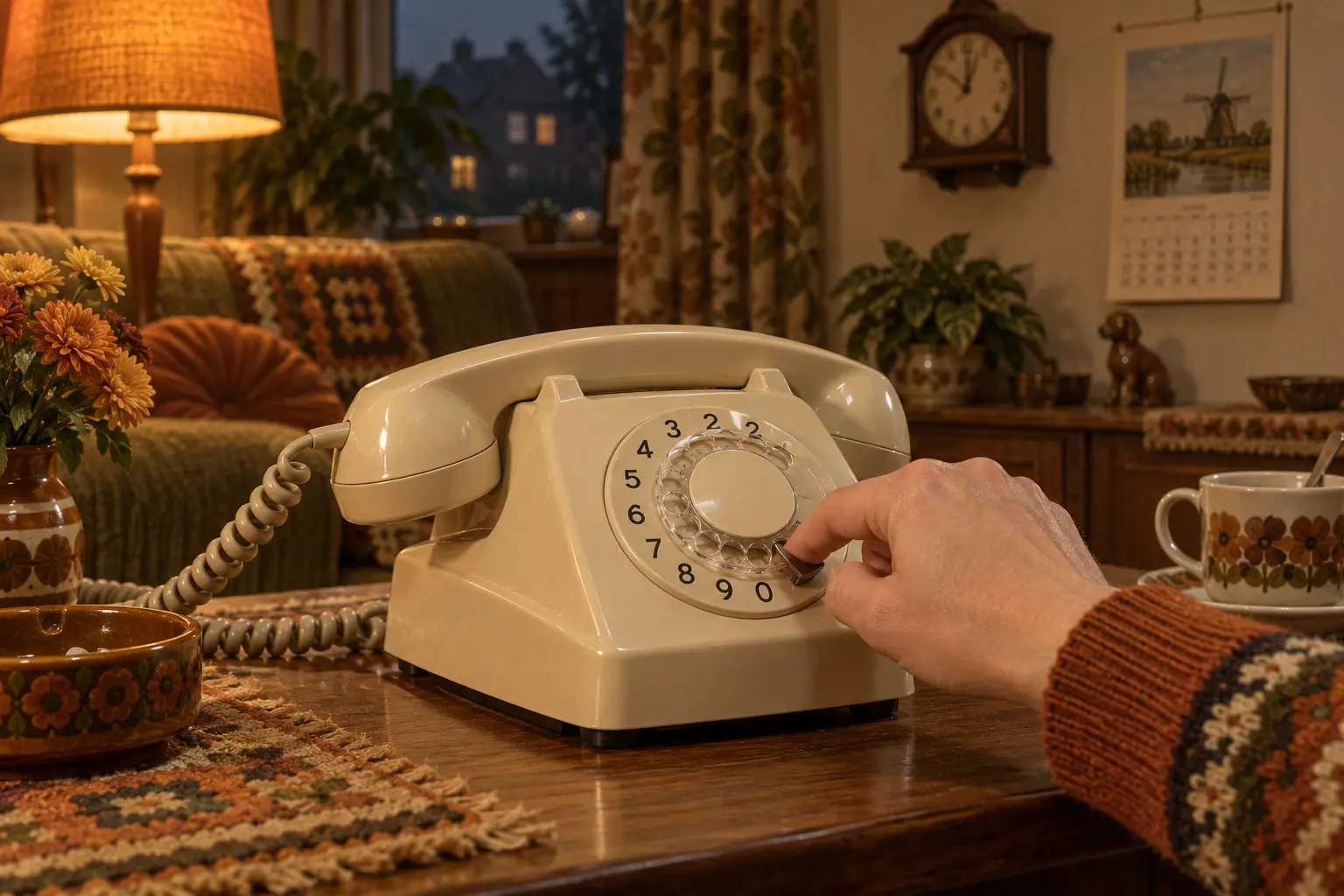
Dialling 002 did not connect you to an operator. A calm female voice announced the hours, minutes and seconds. A tone then sounded, allowing listeners to set their clocks and watches.
A clock that could talk
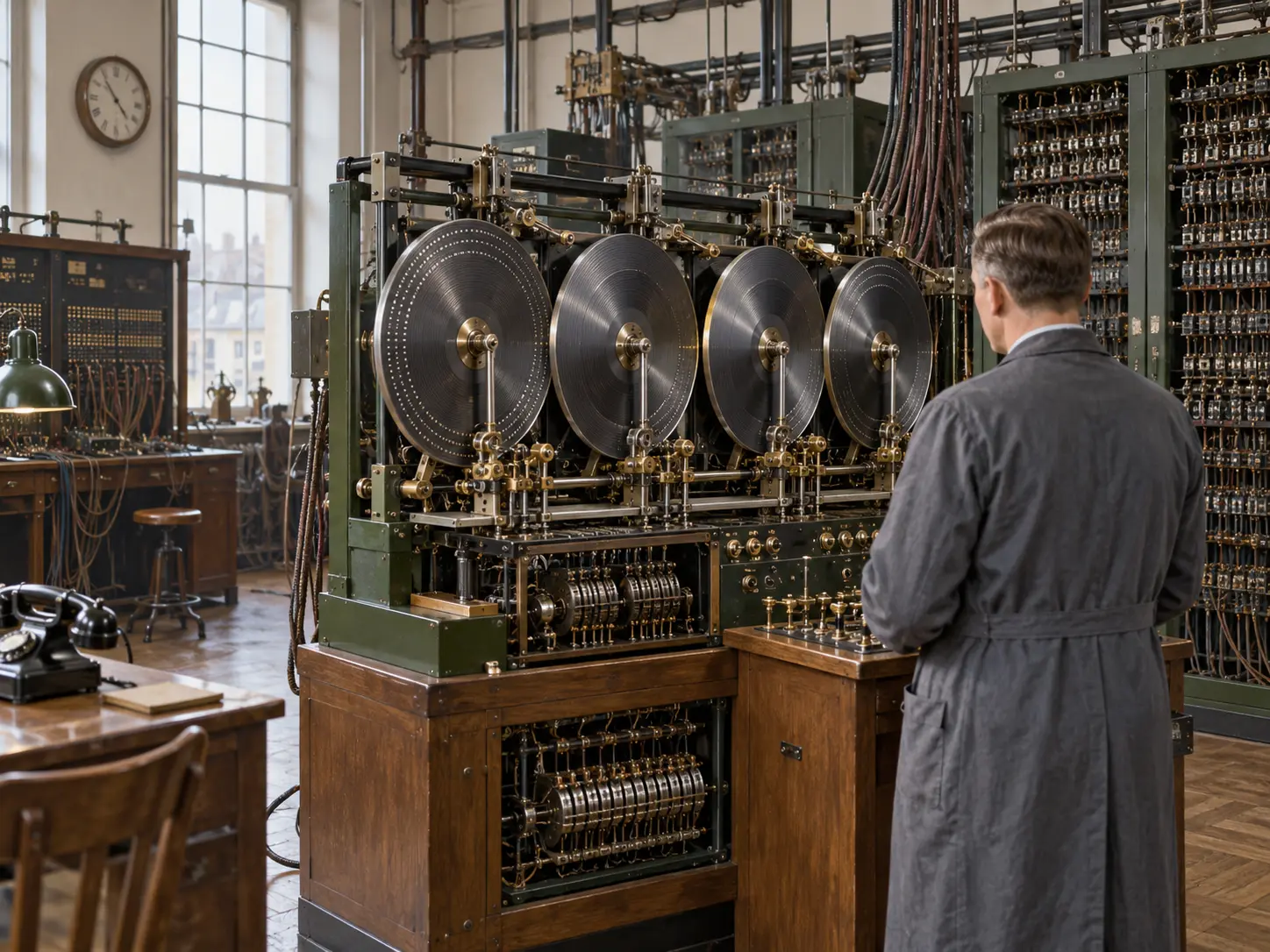
The telephone time announcement did not begin as a single national service. In Haarlem, people could already obtain the time by telephone in 1930, initially through a system of tones. The Hague acquired a real speaking clock in 1934. Electrical engineer F.H. Leeuwrik built a device that combined words from rotating strips read optically.
The first voice in The Hague belonged to teacher Cor Hoogendam. This gave the installation its nickname, Auntie Cor. In the following decades, time announcers appeared in more and more telephone districts. Eventually, 002 became the familiar number for the exact time throughout the Netherlands.
Separate words, one flowing sentence
The speaker did not have to record every possible time individually. Hours, minutes and seconds were recorded as separate sound fragments. At the right moment, the machine selected the required words and played them in sequence. A new announcement followed every ten seconds.
From 1969, listeners in the Netherlands heard actress and radio drama director Willy Brill. In 1992, digital equipment replaced the mechanical installation, and actress Joke Driessen recorded the new sound fragments.
Tens of millions of calls
002 was much more than a novelty. Clocks were less accurate than they are today, and many people wanted to check their alarm clock. Businesses, broadcasters and people who needed to leave at an exact time also used the service. At its peak, the speaking clock received tens of millions of calls a year.
It was especially busy when the clocks changed for summer or winter time. The telephone was then the easiest way to check whether the clock needed to move forward or back an hour.