
Category 02

Calls &
messages

Being reachable once meant staying home by the telephone. Out and about, you looked for a telephone box; for urgent news, you sent a telegram; and a pager only told you that someone needed you.

Explore the stories

From operator to pocket

A short timeline

  1. Amsterdam gets the Netherlands’ first public telephone network, with 49 connections.

  2. The first public street telephone box appears on Valeriusplein in Amsterdam.

  3. The public Dutch paging service starts: calls are transmitted by radio.

  4. KPN transfers its telegram service. The telegram survives as a small, specialised service.

01 · Calling from home

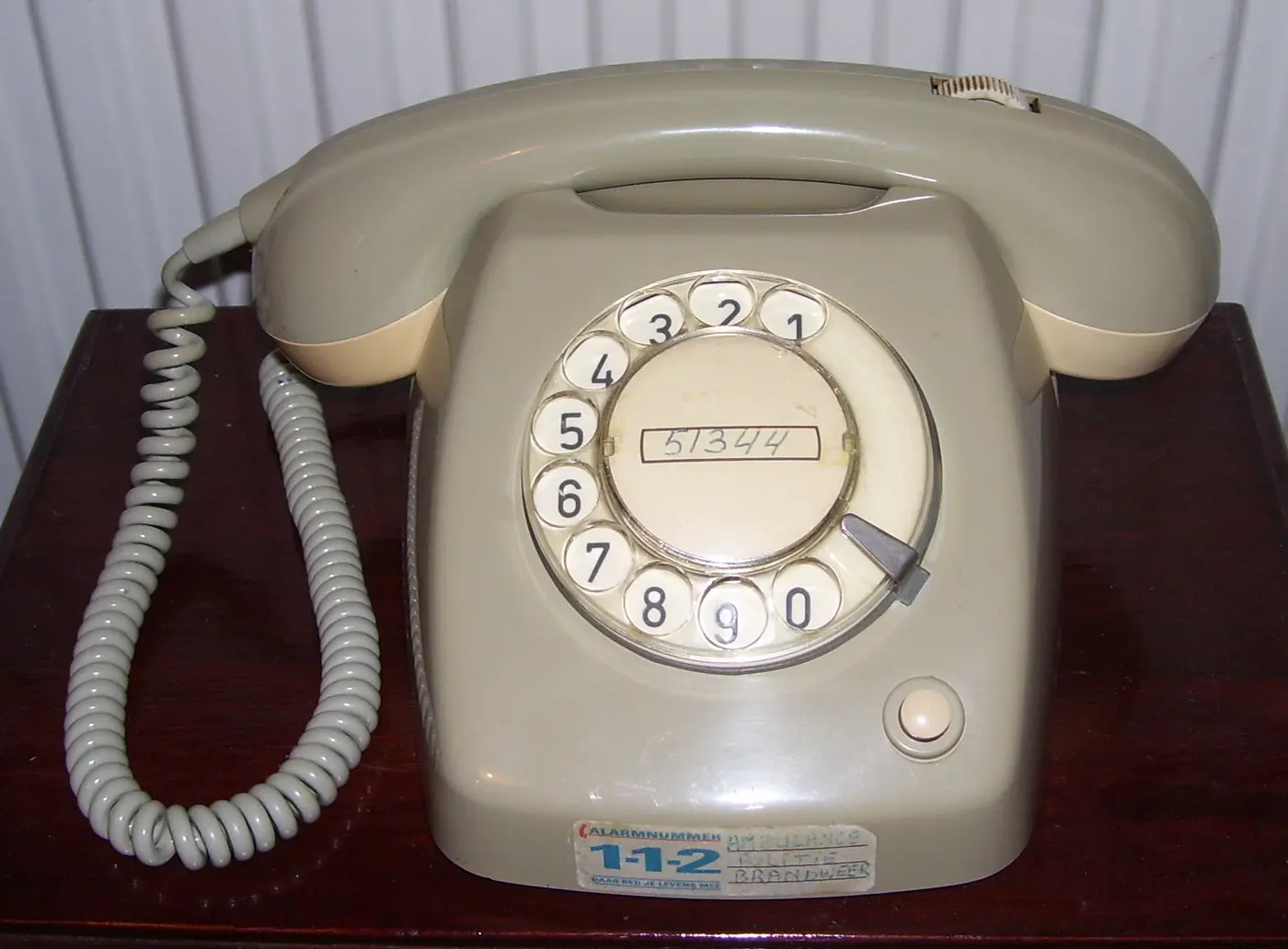
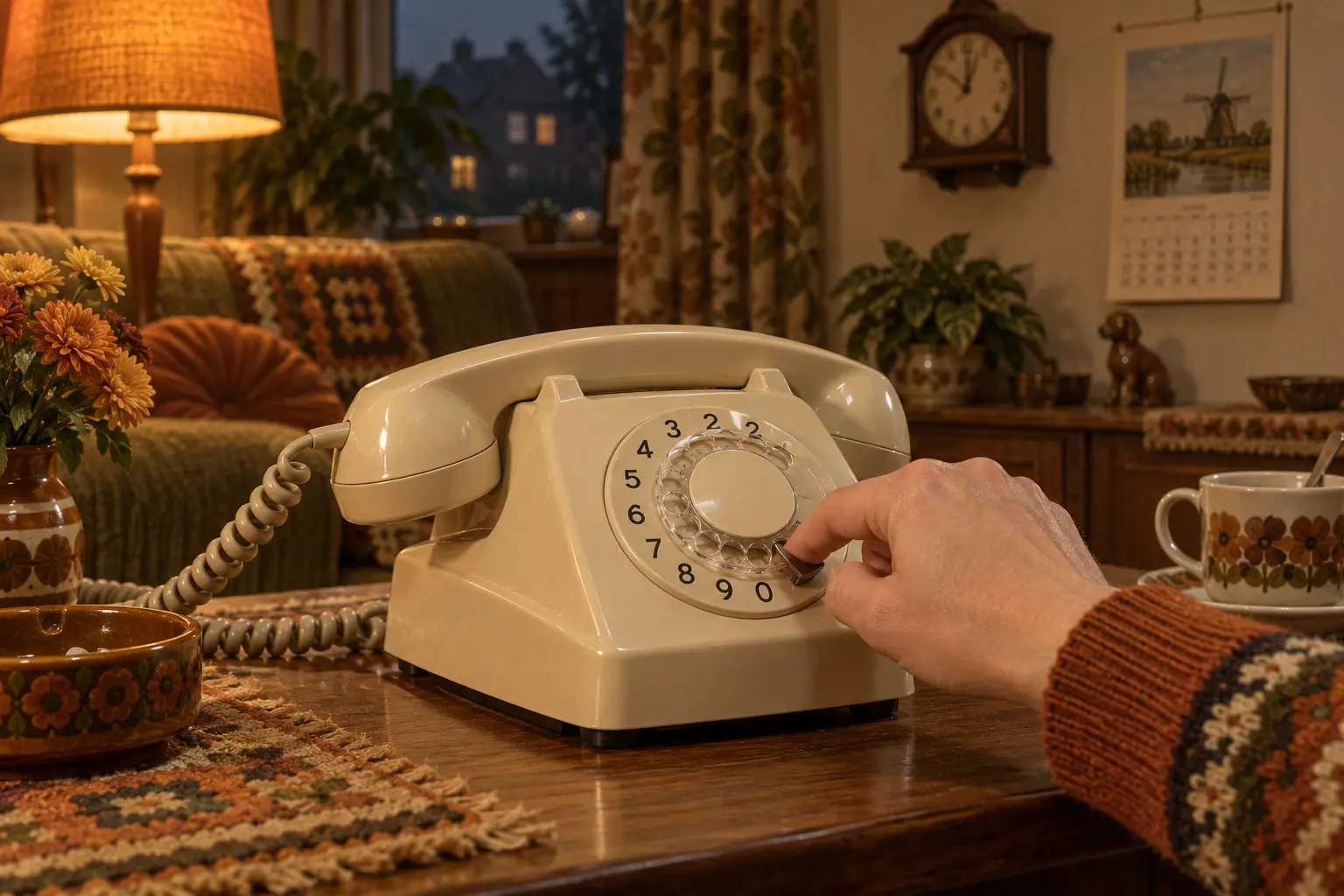
An ivory Dutch T65 rotary telephone with a coiled cord
Dutch T65 telephone. Photo: Zutje, Wikimedia Commons · CC BY-SA 3.0.

The telephone usually stood in a fixed place at home. The cord length determined how far you could walk during a call.

The rotary telephone

You lifted the receiver, waited for the dial tone and dialled each digit separately. A mistake on the last digit meant hanging up and starting again.

How you dialled a number

You put a finger into the hole for the first digit and turned the dial clockwise to the metal stop. Then you released it. As the dial returned, the phone sent a series of electrical pulses to the exchange. Those pulses indicated the digit you had chosen.

How it worked

  1. 1
    Lift the receiver

    A steady dial tone told you the line was available and you could begin.

  2. 2
    Dial digit by digit

    For zero, the dial made almost a complete turn. Long numbers therefore took time.

  3. 3
    Listen to the tones

    The ringing tone meant waiting. A short, repeated tone meant the line was engaged.

  4. 4
    Replace the receiver

    This ended the connection and made the line available again.

The telephone belonged to the house

Many Dutch families had one phone, often in the hallway or living room. Everyone could hear a call coming in — and sometimes listen to the conversation. A second phone in the bedroom was a luxury. You knew numbers by heart or looked them up in an address book and the thick telephone directory.

Sound familiar?

The coiled cord, the note of important numbers beside the phone and the heavy bell ringing throughout the house.

What replaced it?

From the 1980s, push-button phones became increasingly common. They made dialling faster and gave access to new telephone services. Cordless home phones and later mobile phones eventually freed calling from that one fixed spot.
02 · Calling on the move

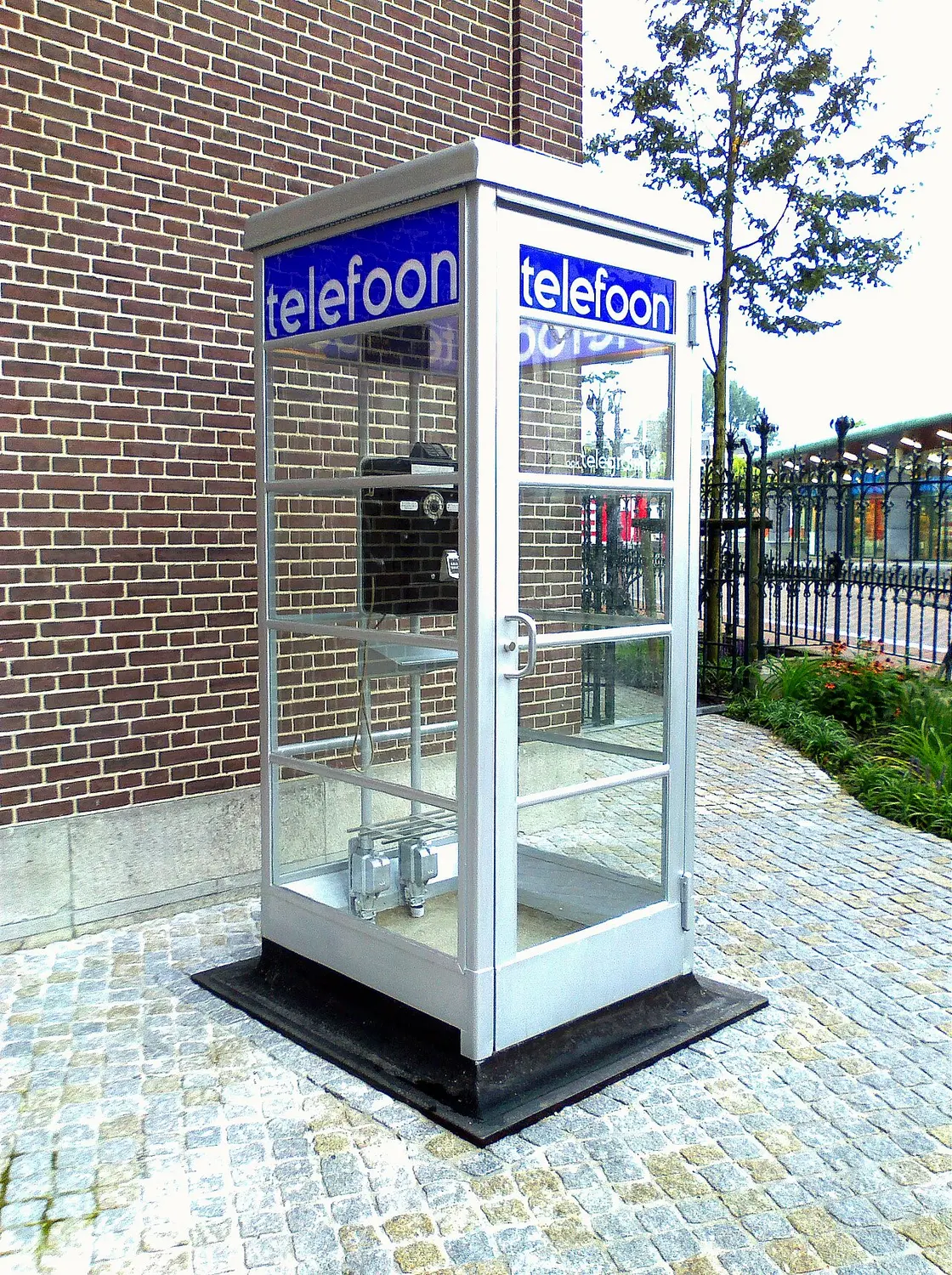
Historic Dutch public telephone box made of metal and glass
Public telephone box in Amsterdam. Photo: OSeveno, Wikimedia Commons · CC BY-SA 4.0.
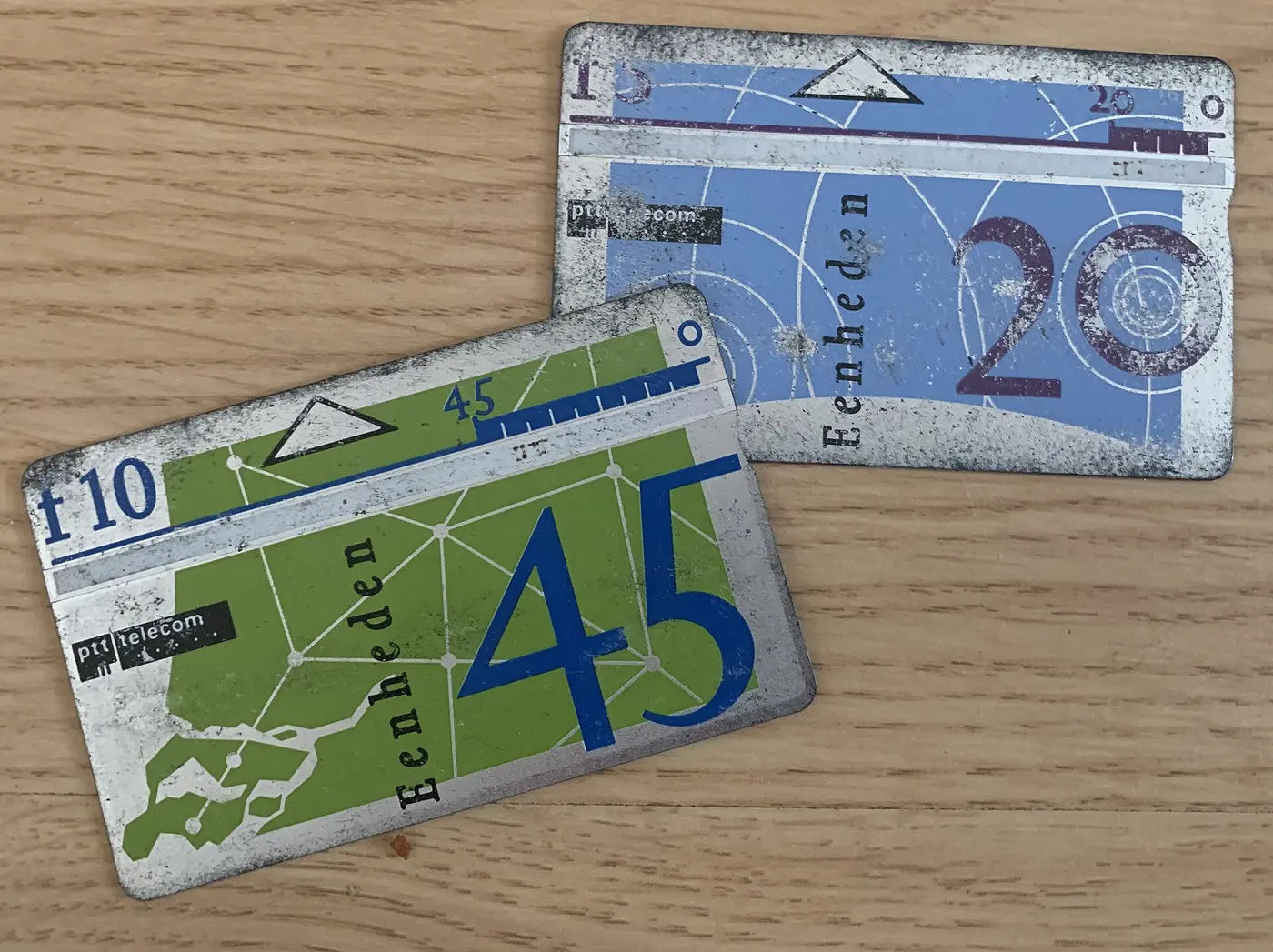
Two used PTT phonecards worth ten and twenty guilders
PTT phonecards. Photo: Milliped, Wikimedia Commons · CC BY-SA 4.0.

The glass telephone box was a familiar landmark. Later, you no longer needed to save coins: the phonecard kept track of your calling credit.

The telephone box and phonecard

To make a call while out, you looked for a glass booth. First you used coins, later a plastic card carrying a fixed amount of credit.

Always carry small change

At a coin-operated phone, you inserted money and dialled or keyed in the number. During the call, you sometimes heard a warning that credit was running low. You then had to add another coin quickly. Without the right money, you tried changing it at a shop or café.

Calling with a chip card

The phonecard made the cash box unnecessary. You bought a card with fixed credit, inserted it into the phone and saw the remaining units or amount on a screen. The credit decreased during your call. An empty card could not be reloaded and was often thrown away — or kept by collectors.

1931

The Netherlands’ first street telephone box stood on Amsterdam’s Valeriusplein.

PTT green

The colour of the familiar Dutch telephone boxes that stood in the streets for years.

A public conversation

Privacy was limited. Bicycles and trams passed outside the glass, and someone might be waiting impatiently. Yet the box was essential after a car breakdown, a missed train or when you needed to say you would be home late. Telephone boxes therefore stood mainly near stations, squares and other busy places.

Before leaving

You wrote the telephone number on a piece of paper. Without a contacts list in your pocket, the telephone box would otherwise be of little use.

Why the boxes disappeared

With a mobile phone, you could make the same call anywhere. Public telephone use declined rapidly and many boxes were removed. A small number remained for a while or found a new purpose as miniature libraries, artworks or cabinets for defibrillators.

03 · Urgent messages

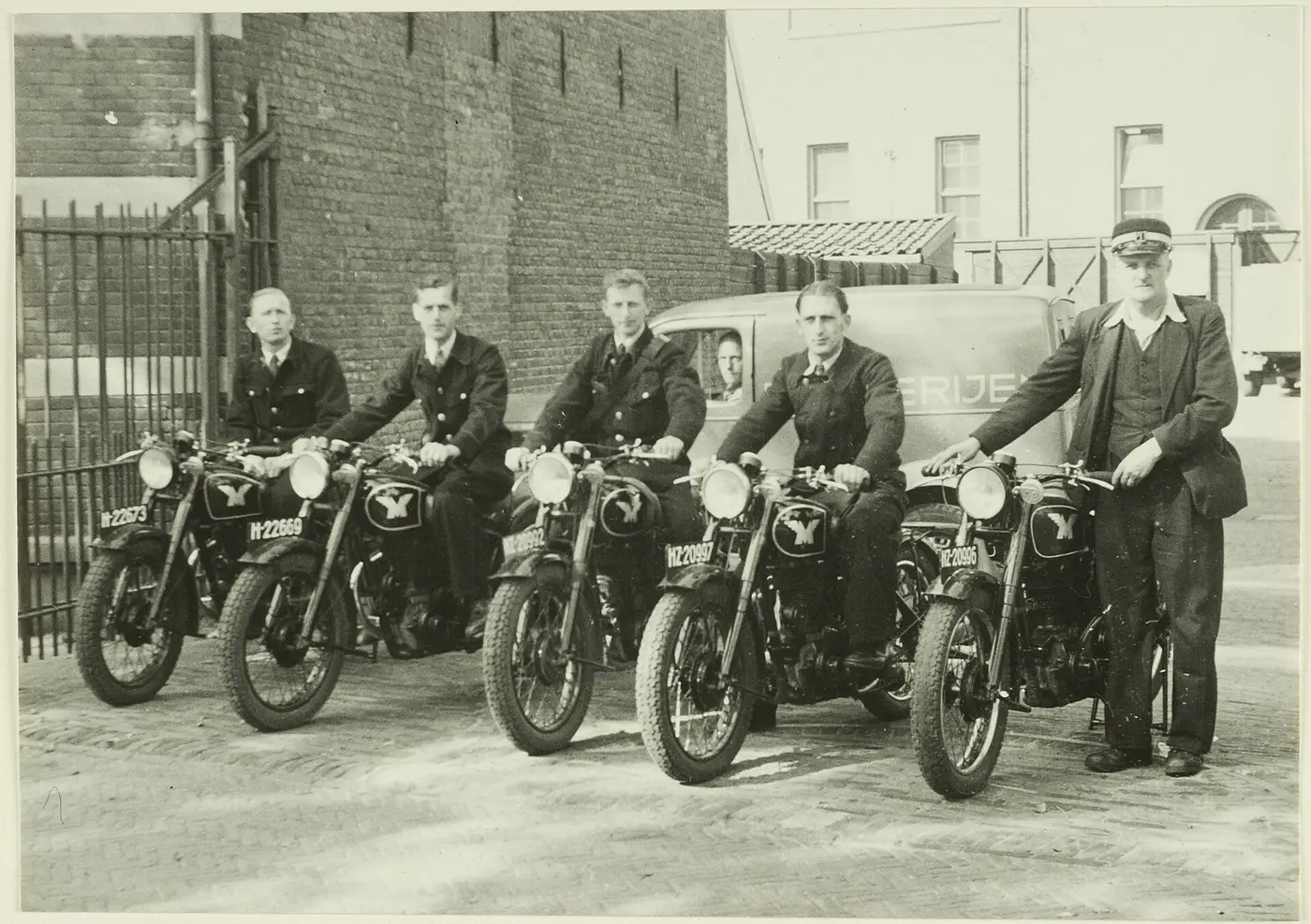
Five uniformed PTT telegram delivery staff with their motorcycles
PTT delivery staff for telegrams and express items. Photo: Cees de Boer, Noord-Hollands Archief via Wikimedia Commons · CC0.

Telegrams were not only sent but also delivered urgently. Special PTT delivery staff had their own motorcycles for the job.

The telegram

A telegram was faster than a letter and more formal than a phone call. Its text travelled over a telegraph connection and was then delivered to the recipient on paper.

How did you send a telegram?

You submitted the text and address at a post or telegraph office, or dictated the message over the telephone to the telegram service. A staff member prepared it for transmission. At the other end, the text was printed or typed and a delivery worker took it to the specified address.

Brevity paid

  1. 1
    Just the essentials

    Because length affected the price, courtesies and unnecessary words disappeared.

  2. 2
    Clear addresses

    Name, street and town had to be enough to deliver the message quickly.

  3. 3
    Sending through the service

    The sender supplied the text; staff handled the technical transmission.

  4. 4
    Delivery to the door

    The recipient received a paper message, often in a recognisable envelope.

News with weight

Telegrams were used for urgent family news, business instructions and official announcements. They could bring bad news, but also congratulations for a wedding or anniversary. The very presence of a delivery worker at the door made the message feel important.

Has the telegram disappeared?

Almost, but not entirely. Telephones, fax, email and mobile messages took over its practical function. In 2001, KPN stopped operating its own telegram service and transferred it to a specialist company. Sending a telegram therefore remained possible, but became a service for special occasions.

04 · Always on call

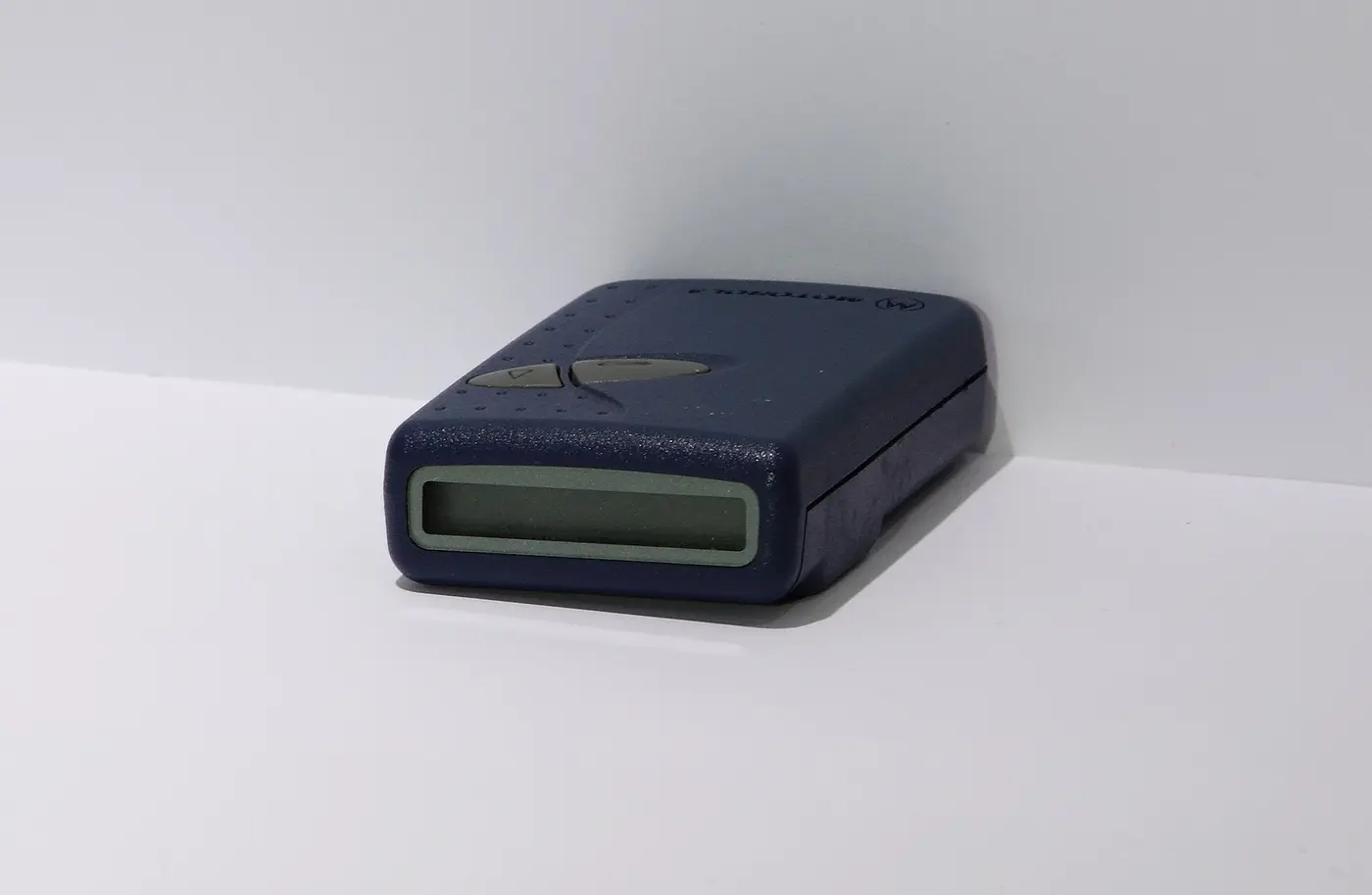
A dark Motorola pager with a small display and two buttons
Classic Motorola pager. Photo: Jakez, Wikimedia Commons · CC BY-SA 3.0.

The pager could tell you whom to call, but was not itself a telephone. To answer, you still needed to find a fixed phone.

The pager

Read the full story →

A small box on your belt beeped or vibrated when someone tried to reach you. A code or telephone number appeared on the screen: your signal to call back as soon as possible.

A call by radio

The sender called a central service and selected the pager’s number. The network then transmitted a coded radio signal. Only the intended device responded. Early models used lights to show an agreed meaning; later pagers could display numbers and short texts.

Reachable, but unable to talk

An ordinary pager worked in one direction only. You knew someone wanted you, but could not answer through the device. Doctors, technicians and sales representatives therefore looked for a telephone after an alert. The number on the display often immediately identified whom to call.

1Someone calls the paging service
2The network broadcasts the alert
3The pager displays a number or code
4The wearer finds a telephone

From suitcase to pocket

When the Dutch paging service began in 1964, receivers were still large and heavy, and were used in vehicles, for example. Later, they became small enough for a coat pocket or belt. In the 1980s and 1990s, the pager became a recognisable sign of availability in many professions.

Not entirely gone

Hospitals and emergency services still use pagers and paging networks. They are simple, fast and can reliably cover a large area.

What took over?

The mobile phone combined alerts, conversations and later texts in one device. Most users no longer needed to call back from another phone. The pager disappeared from everyday street life while continuing its work behind the scenes.

Also in this category

The telephone directory and the Gouden Gids

Look up a name, find a tradesperson and dial. A whole town beside the telephone.

Read the story →

Keep exploring

From a beep on your belt to everyone always being reachable.

Explore all categories