
Look it up first, then make the call
You knew somebody’s name and the town where they lived. That was a start. You opened the directory at the right municipality, then searched for the surname. A finger moved down the entries. With a common name, initials and an address helped you identify the right person.
You wrote the number on a scrap of paper or kept the book open while calling. With a rotary telephone, one misread digit meant starting again. Put the receiver down, then dial once more.
For frequently used numbers, you kept a personal address book. Family, friends, the doctor: you did not want to look those up every time. The directory was for the other occasions. A shop whose opening hours you wanted to check. An acquaintance you had lost touch with. Somebody you knew only by name.
The number belonged to the home
A directory entry reflected the way people used the telephone. The number usually belonged to a household. Whoever answered was not necessarily the person you wanted to speak to.
“Is your father at home?” Or: “Could I speak to Mrs De Vries?”
One connection served an entire family. It was often listed under the name of one subscriber. Partners and children were therefore not automatically searchable under their own names. The directory was not a complete list of residents, however much its size might suggest otherwise.
People without a telephone or with an unlisted number were missing too. Somebody living outside your directory’s region would not necessarily appear in the book you had at home. You needed another directory or a call to directory enquiries.
Finding yourself among thousands of names
A new edition could prompt you to check your own entry first. Was the address right? Were the initials correct? Had a recent move been included?
There you were, in the same small print as everyone else. No portrait or personal profile, just a name, an address and a number. Yet it was a peculiar kind of visibility: your household appeared in a book kept in homes across the area.
Seen through today’s attitudes towards personal information, the address is particularly striking. A listed household could often be found physically as well as reached by telephone. That was useful, but not everyone wanted such exposure. An unlisted number was a way to stay out of the directory.
From 49 connections to thick books
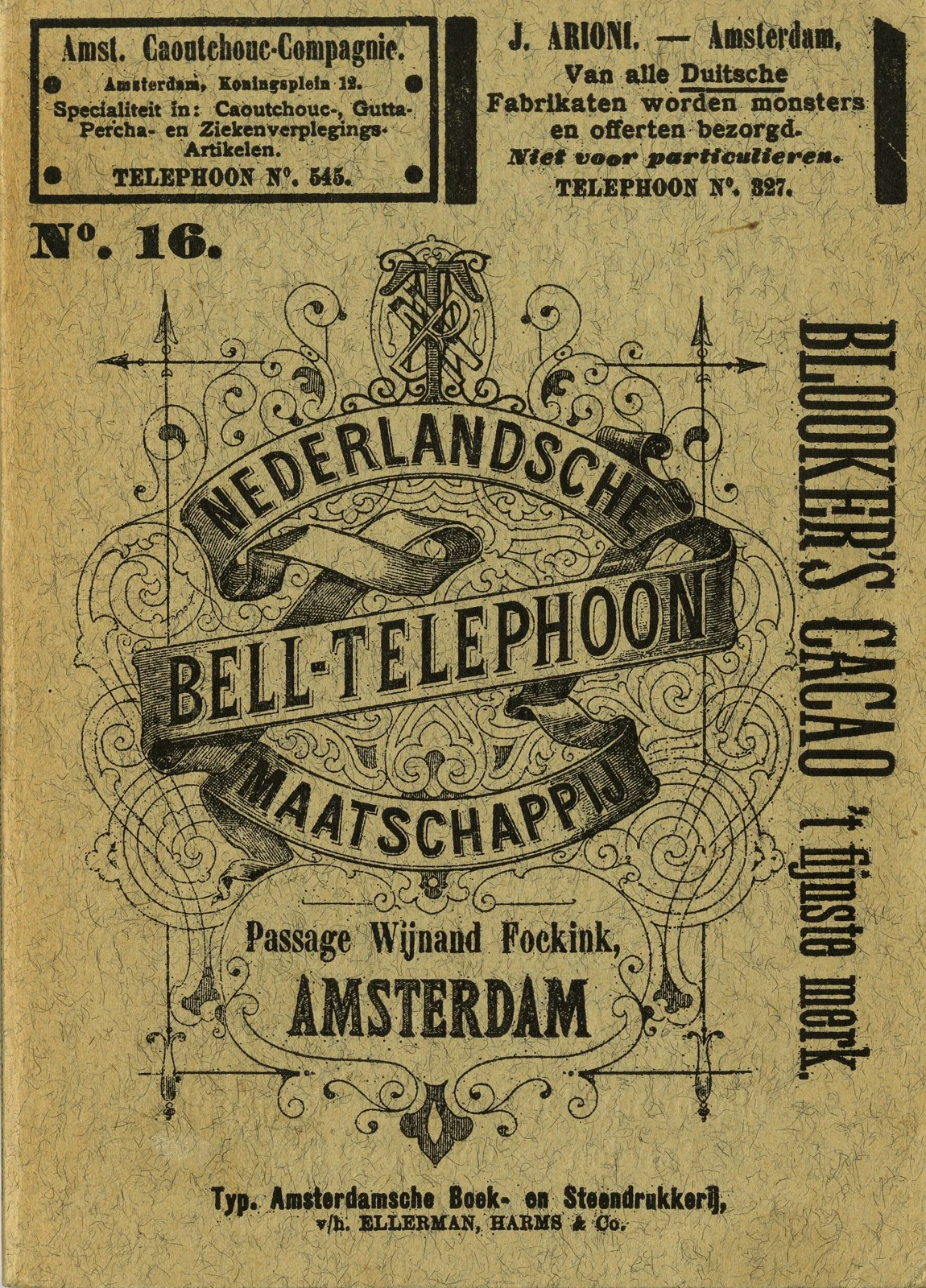
The first Dutch telephone directory appeared in 1881 and contained just 49 addresses and telephone numbers. It could be consulted at the telephone exchange. That modest beginning seems a world away from the thick regional directories that later arrived in Dutch homes.[1]
As telephones became more common, the books grew. The result was an everyday reference work that you rarely actually read. You opened it to find something and closed it again afterwards.
The design was primarily practical. A lot of information had to fit on a page. Small lettering, narrow columns and little space around them. For people who found reading difficult, searching was not always easy. The book was familiar, but you still had to navigate that sea of entries.
.jpg)
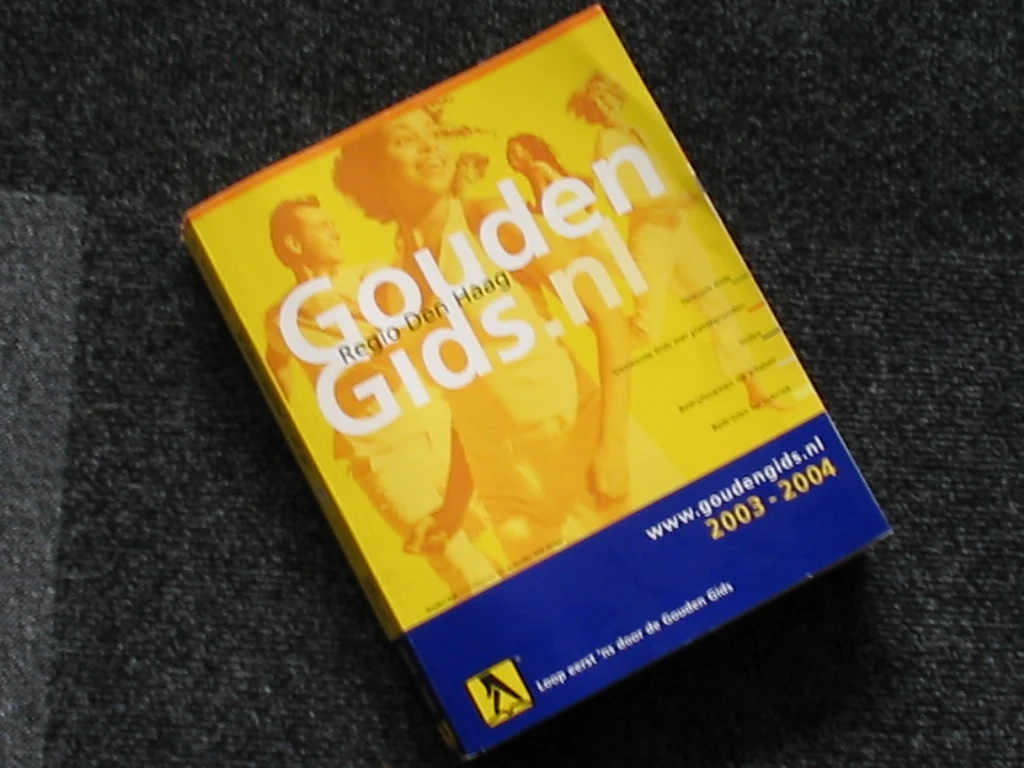
The Gouden Gids: searching without a name
With the telephone directory, you usually started with a name. With the Gouden Gids, you could start with a problem.
The tap leaked. The washing machine had stopped working. You needed a driving school, a window cleaner or somebody to reupholster a sofa. You turned to a business category. You did not have to know which company you would call yet.
The Gouden Gids offered a different way of searching. Businesses were grouped by the kind of work they did. On one page, you could examine several possibilities and compare their advertisements.
A basic listing sat beside a conspicuous box. Some companies bought more space to explain their services. “Emergency call-outs”, perhaps, or a list of specialisms. Advertisements tried to inspire confidence and catch your eye at the very moment you needed help.
A business near the top of an alphabetical list might be noticed sooner. A larger advertisement stood out more. Being easy to find was something businesses worked at on paper too.
A book that knew the neighbourhood
Browsing the Gouden Gids incidentally revealed what a town or region had to offer. Its categories included trades and services you might otherwise barely think about. A rubber-stamp maker, a piano tuner, a party-equipment hire company.
A search could turn into a little further browsing. Which shops were nearby? What did that business with the unusual name actually do?
Such incidental information gives old directories a second life as historical sources. An advertisement preserves the name of a vanished shop. An address shows where a business once operated. A telephone number recalls an era when numbers followed different formats.
Not every entry tells a grand story. Together, they offer a cross-section of everyday life.
The new directory arrived; the old one went
When a new edition arrived, the old book could go into the waste paper. Sometimes it stayed a little longer. There was a handwritten note inside, or an important page had a folded corner.
Annual replacement reflected the limitations of print. A move, a new number or a closed business could only be included in a later edition. The directory was useful when published, but its information immediately began to age.
For a long time, that was an acceptable drawback. The book was ready to use. You did not need to turn on a device or establish a connection. Just look it up.
Fewer reasons to turn the pages
The internet made it possible to find contact details without reaching for a regional directory. Businesses launched websites with opening hours and directions. Mobile phones stored personal numbers. For regular contacts, there was less reason even to write anything down.
The disappearance of the printed directory was therefore not a sudden break. First, you used it less. Then it stayed in its usual place without being opened. Eventually, when another edition arrived, you wondered why you still received it.
The Dutch Telefoongids and Gouden Gids were published together from 2009. In 2018, the final printed editions of that combined publication appeared in the Netherlands. The sharp decline in use was the reason for stopping.[2]
For people who still relied on it, this meant losing a familiar way of finding information. Training sessions were offered to help older people learn to look up telephone numbers online.[2]
A book you never read from beginning to end
The telephone directory was one of the strangest books in the house. You never read it through, but you might keep it within reach for years. The Gouden Gids turned the same act of browsing into a search for help.
What remains in the memory is the action itself. Picking up the heavy book. Turning the thin pages. Moving a finger down a column. Finding a number and lifting the receiver.
Before a conversation could begin, there might first be some pages to turn.