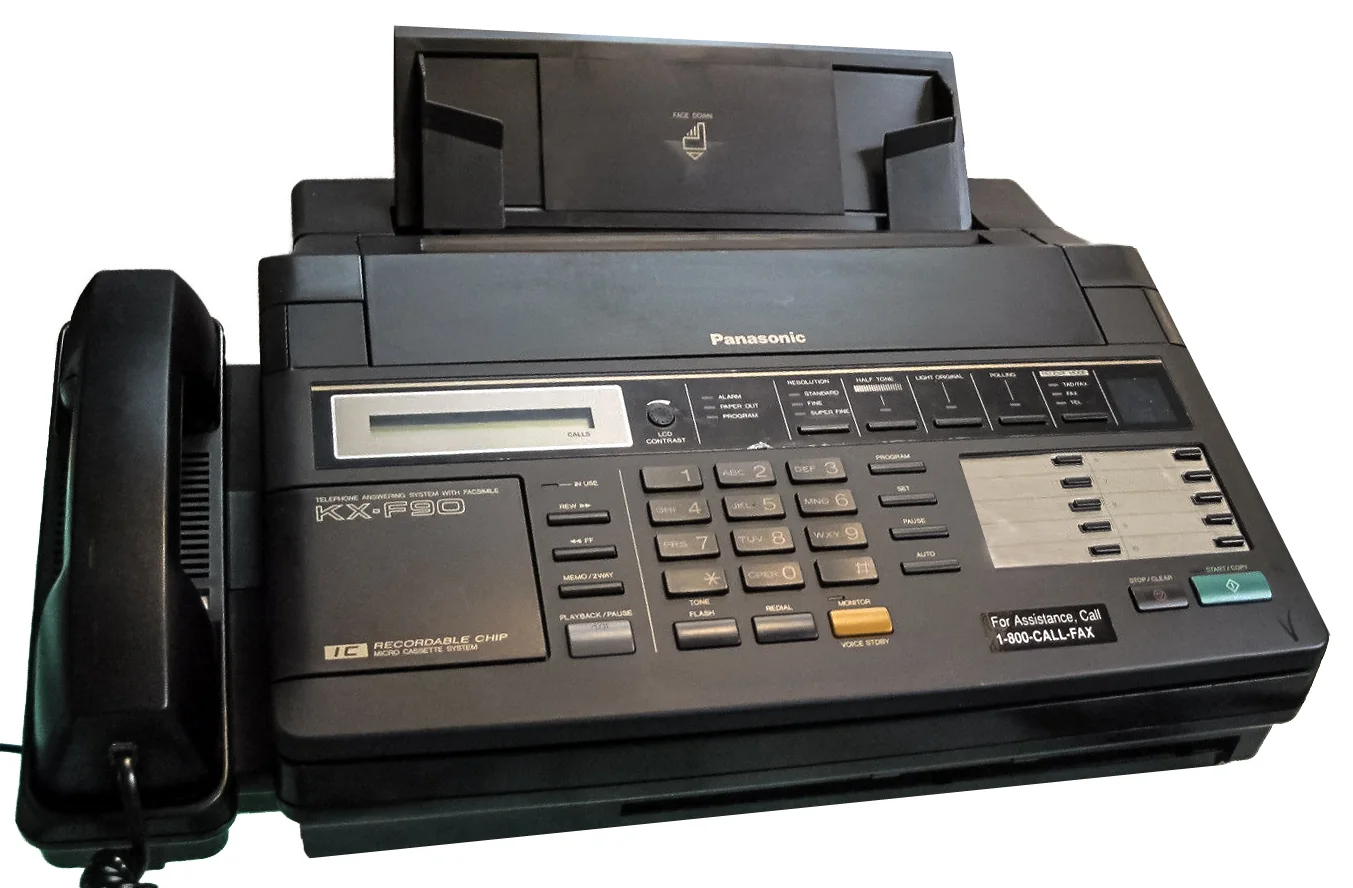

In an office, it could suddenly ring with nobody nearby. Then came a click, electronic beeps and the soft movement of paper. Anyone who looked saw a message slowly emerge: an order, press release, form or handwritten note. The sender did not have to visit, and no envelope needed posting.
In the 1980s and 1990s, the fax became familiar in many Dutch businesses and institutions. Editorial offices, hotels, hospitals and small businesses used it too. It often occupied a prominent spot: perhaps something everyone was waiting for had just arrived.
Paper on a journey
Fax is short for facsimile: a copy as faithful as possible. The machine scanned a document line by line, converted light and dark areas into signals and sent them over a telephone connection. The receiving machine turned them back into an image on paper. A signature, sketch or stamp could travel too.
That distinguished it from a telephone conversation. You did not need to read out or retype the contents. The sheet appearing at the other end looked roughly like the original — although quality could be poor. Small lettering, grey areas and photographs did not always reproduce well.
An invention older than the telephone
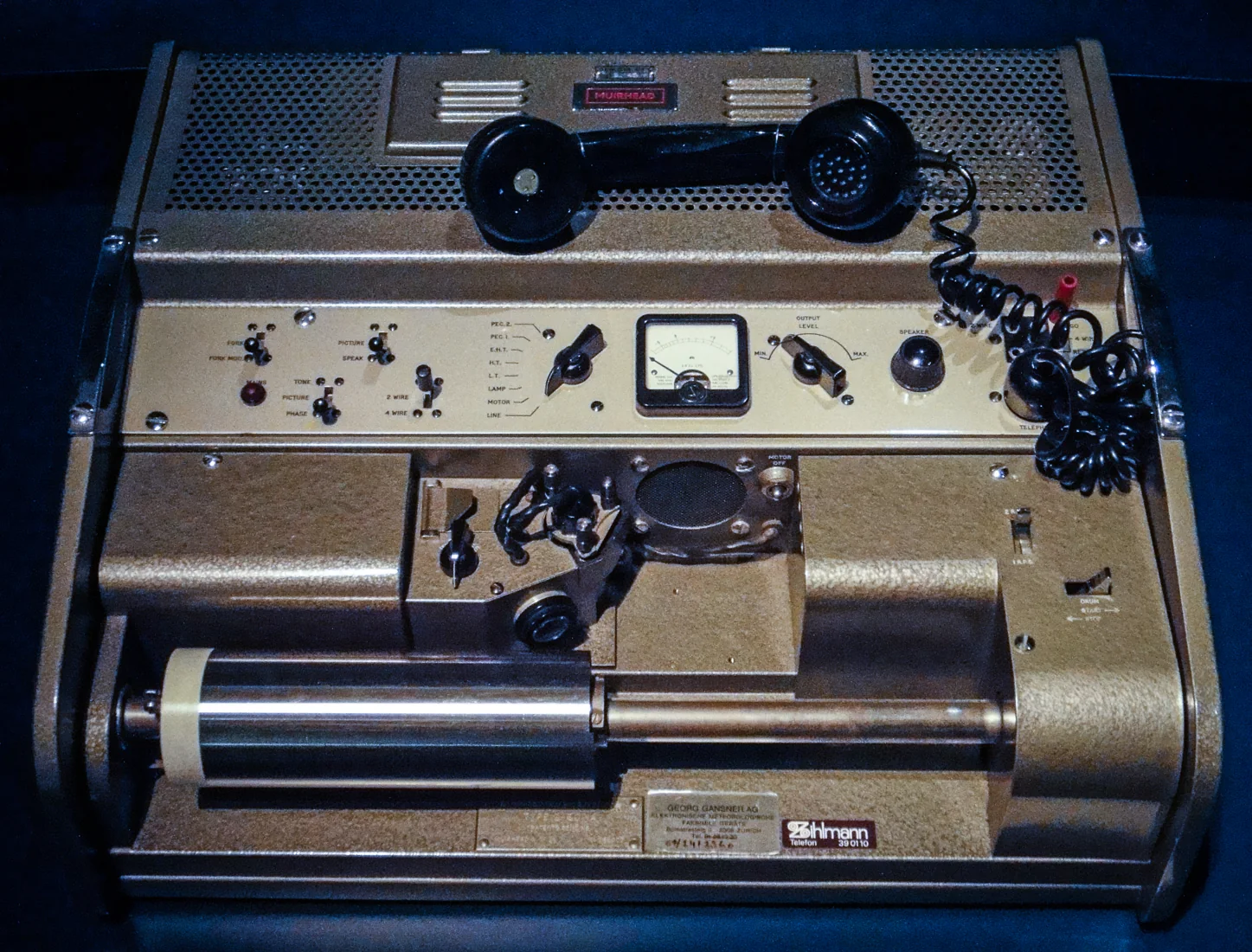
The idea is much older than the grey machine on the office counter. Scottish inventor Alexander Bain patented an early technique for transmitting images electrically in 1843, before the telephone itself. Such early systems were complicated and had little in common with the faxing that later became routine in offices.
In the twentieth century, news organisations could already transmit photographs over long distances. For ordinary offices, sending images remained expensive and cumbersome for years. Machines connected to telephone lines, such as the Xerox Magnafax of 1966, gradually changed that. Smaller, faster machines made faxing attractive for everyday use, particularly from the 1980s.

The sending ritual
Faxing began with a clearly legible original. A cover sheet often accompanied it, listing the recipient, fax number, page count and a short message. You then placed the sheets in the feeder, entered the number and pressed Start.
Then came the tense part: making contact. Sometimes the line was busy. Sometimes a person answered because the number was entered incorrectly. And sometimes the paper fed through crookedly while the sender assumed all was well. A confirmation slip was therefore welcome: it said whether the machine considered the connection and transmission successful. For really important documents, you sometimes telephoned afterwards too.
A fax conveyed urgency. A letter needed delivery; a fax could reach a desk within minutes. That was invaluable when a signature, drawing or completed form was needed quickly. Editorial offices could receive news or copy without a postman. Hotels used it to transmit reservations. People without a fax at home could sometimes use one at an office, shop or copy shop.
Paper with a curling edge
Many people remember the narrow roll of fax paper. Older and inexpensive machines used heat to reveal text on thermal paper. An incoming message sometimes rolled out with a stubborn curl. Convenient, but not ideal for long-term storage: prints could fade or darken over time. Later, many fax machines also printed on ordinary paper.
The machine had other quirks. A fax arriving at night could wake everyone nearby. An empty paper roll or jammed sheet meant an urgent message failed to appear neatly in the output tray. And because incoming messages lay openly in the tray, a fax in a shared corridor was not automatically confidential.

From essential to rare
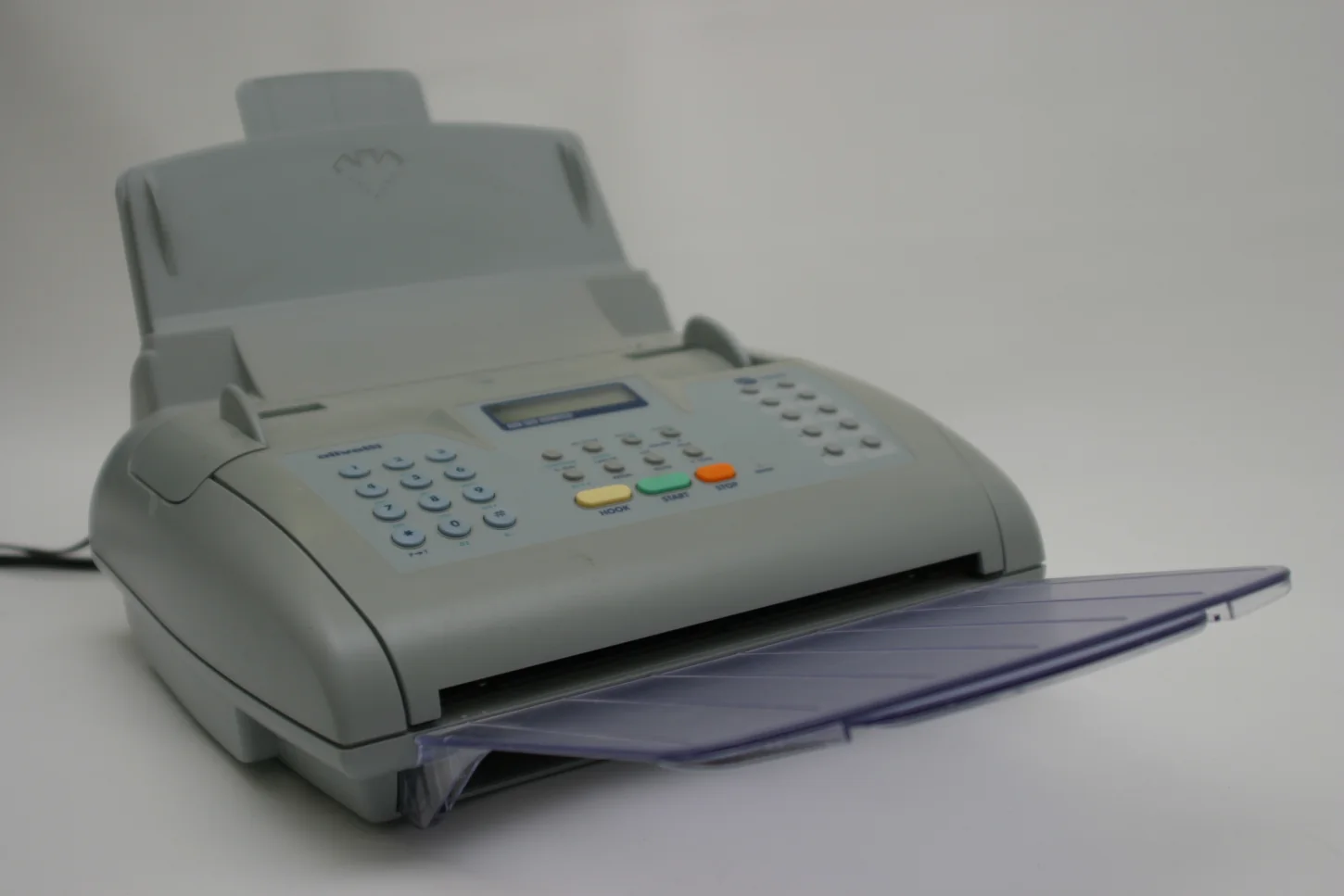
As email, and later scanners, PDFs and online forms, became commonplace, the fax lost much of its advantage. Documents could be sent digitally without printing them first and producing paper again at the other end. Yet faxing did not disappear overnight. Established procedures and machines remained in use in some places, and various services and systems still support faxing.
The fax bridged two worlds. A message travelled electronically but began and ended as paper. Perhaps that makes it so memorable: you heard the connection being made and could hold the result. A message from another town arrived as a sheet slowly creeping out of a machine, rather than a notification on a screen.