Music in a box that fitted in your hand
The cassette was more than a way of listening to music. You could record, copy, keep and share it yourself.
From large reels to a little box
In the 1950s, recording sound usually meant using a reel-to-reel tape recorder. It was large, heavy and not particularly easy to operate. You had to guide the magnetic tape manually around several components. For many households, recording was therefore not yet an everyday activity.
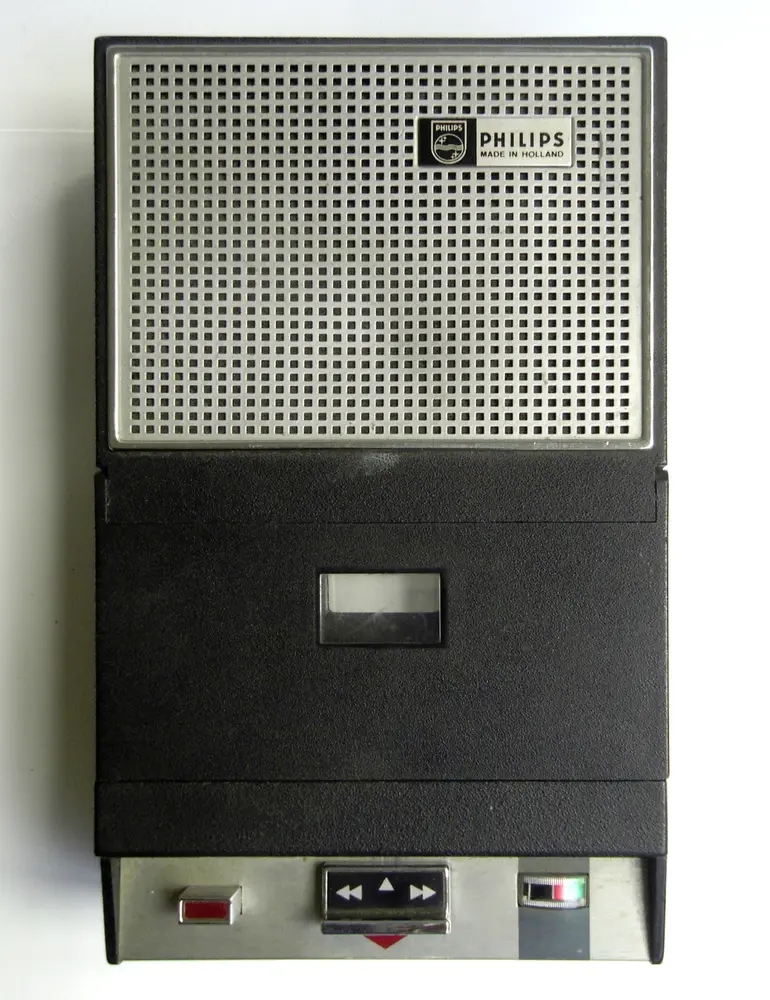
In the early 1960s, a Philips team in Hasselt, Belgium, worked on a much smaller system. Dutch engineer Lou Ottens headed Product Development. According to the Philips Museum, he had a wooden block made that had to fit in his coat pocket. Its size became the starting point for the new recording format.
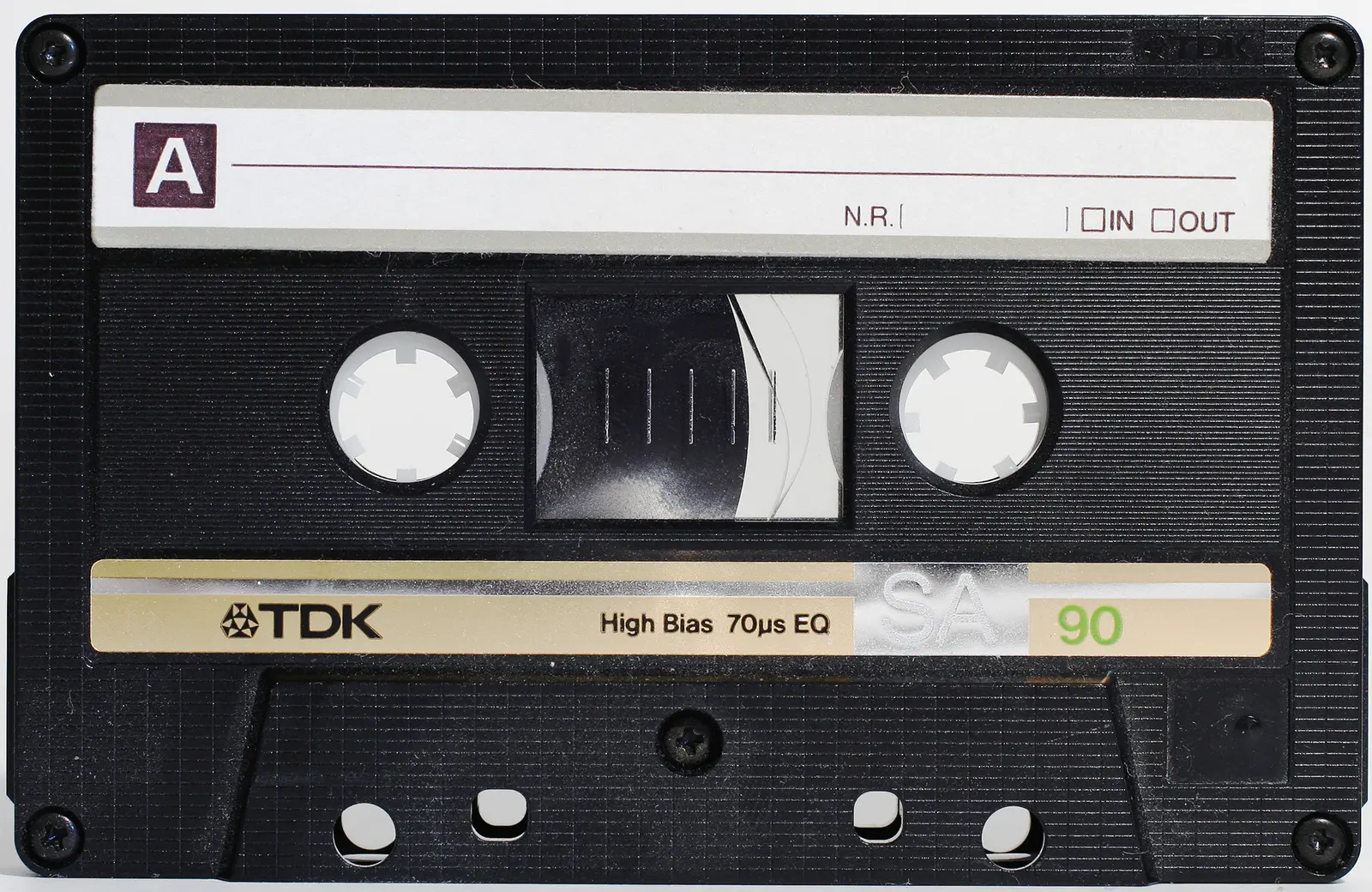
In August 1963, Philips presented the Pocket Recorder EL 3300 and its Compact Cassette at the Internationale Funkausstellung in Berlin. The plastic case contained two small reels with a narrow magnetic tape between them. Users no longer needed to thread anything. Put the tape in, close the lid and start recording.
Philips allowed other manufacturers to use the system without licence fees, provided they followed its technical standard. A cassette from one brand therefore worked in another brand’s machine. That interchangeability helped the Compact Cassette become a worldwide standard.
Recording with two buttons at once
The first cassette was intended mainly for speech. Sound quality soon became good enough for music. Cassette recorders appeared in living rooms, bedrooms, classrooms and cars. They were often built into a radio or stereo system.
Recording usually meant pressing record and play at the same time. A built-in microphone could capture voices and surrounding sounds. The radio let you build your own music collection. Then you had to turn the tape from side A to side B.
About thirty minutes on side A and thirty on side B.
About forty-five minutes of music per side — enough for many LPs.
Recording meant paying attention. Press too early, and you caught part of the introduction. Press too late, and you missed the beginning. And just when things were going well, the DJ sometimes talked over the first or last bars.
Your own Top 40
For many young people in the Netherlands, recording from the radio was part of the weekend. You waited for a favourite song, watched the buttons and tried to outsmart the presenter. Over time, you built a tape containing only music you had chosen yourself.
That may sound like a cumbersome playlist today, but there was an important difference: a cassette was recorded in real time. A four-minute song also took four minutes to copy. You had to plan the sequence beforehand, and sometimes the end of a side was just too short for the next song.
The cardboard insert was therefore filled in carefully. Artist and title on the lines, sometimes with the playing time. Those who put more effort into a tape drew a cover, used coloured pens or gave each side its own mood.

.jpg)
.jpg)
.jpg)