Every photograph was a small decision
‘Take another, just in case.’ Anyone who used a camera before digital photography knew that sentence. But the second attempt also used up one of your limited exposures.
A little canister full of memories
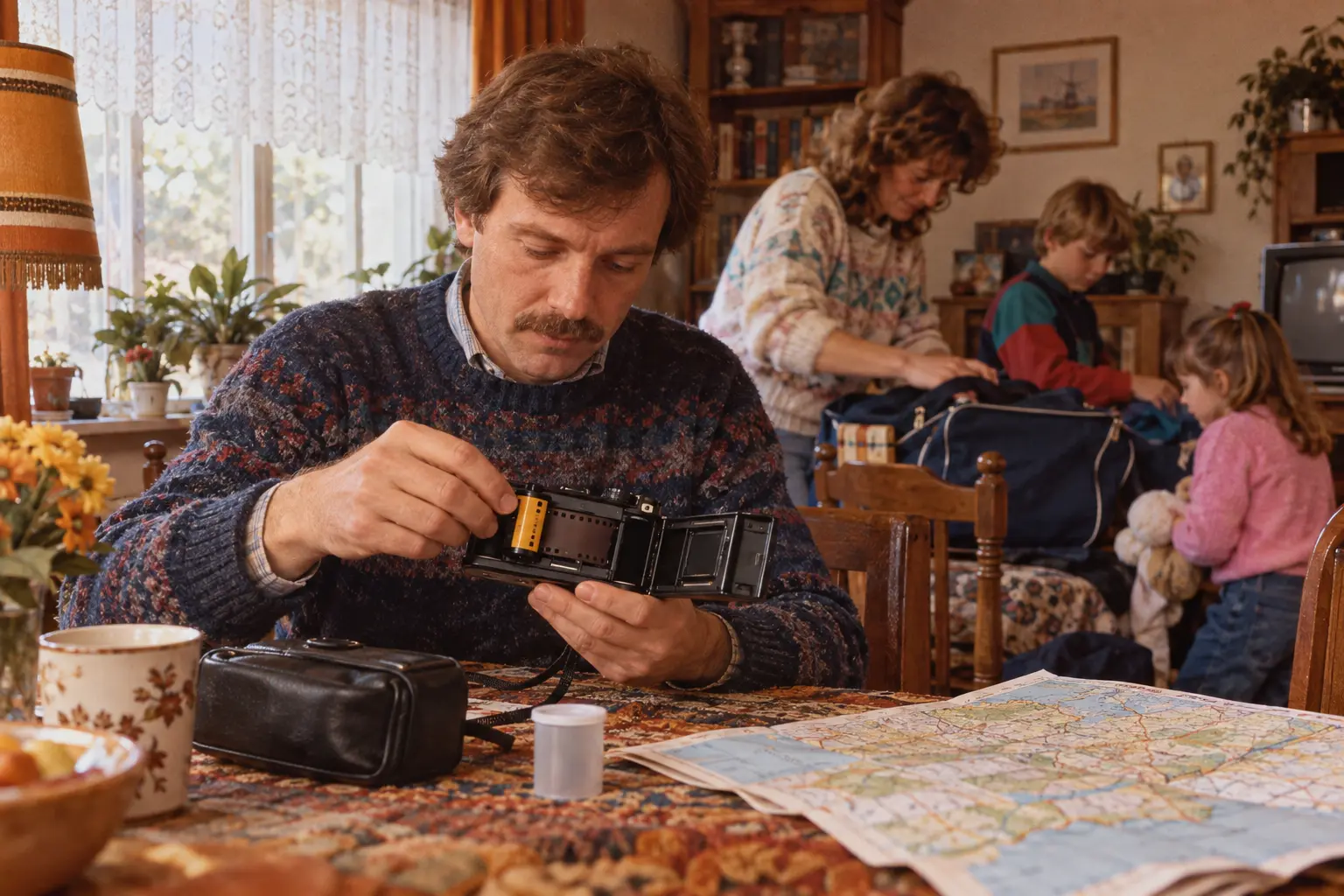
Most simple cameras held a metal or plastic cartridge of 35mm film. A roll usually offered 24 or 36 exposures. Careful photographers could sometimes squeeze out an extra frame. Picture 37 was not on the packaging, but turned out to exist after development.
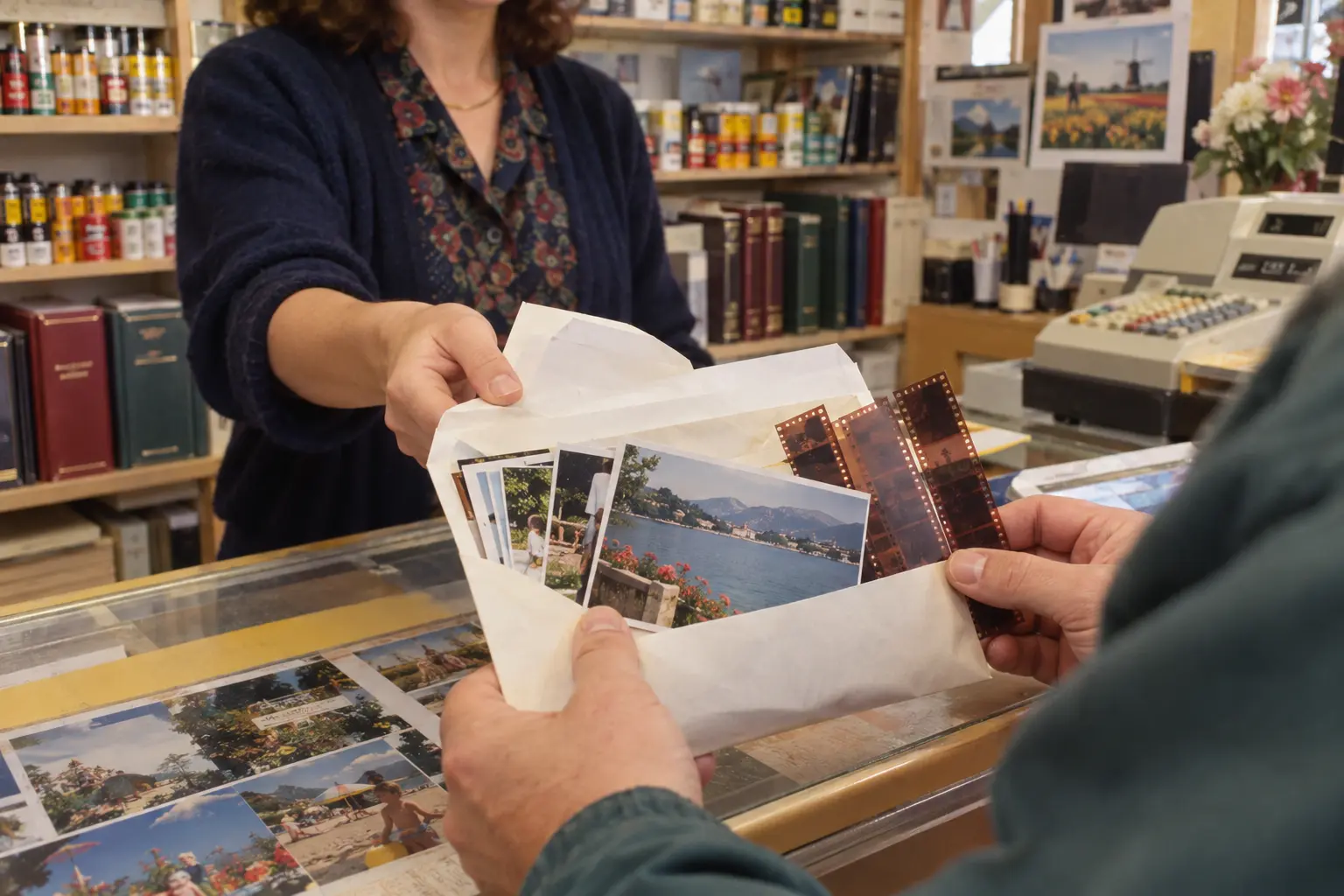
The film itself was a long, light-sensitive strip. For each photograph, a fresh section moved behind the lens. Light hit it for a fraction of a second, leaving an invisible image. Only chemical development revealed the pictures.
The Dutch word fotorolletje — literally ‘little roll of film’ — was used for almost all amateur photographic film, although 35mm film actually came in a cartridge. Kodak, Agfa, Fujifilm and own brands from chemists and department stores sat side by side on the shelves.
A whole holiday in 36 pictures
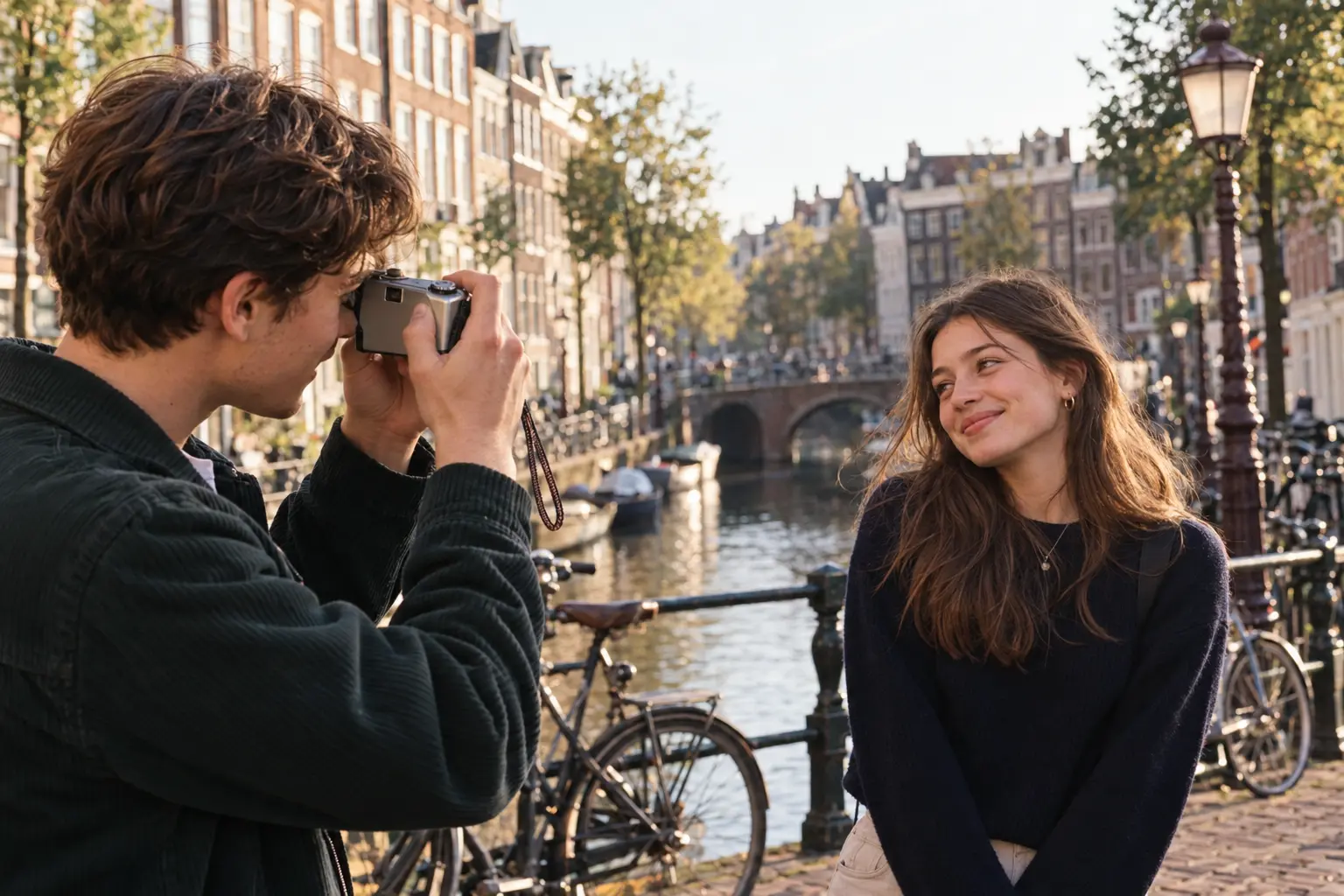
The outward journey, hotel, beach, day trip, children beside a fountain and last evening on the terrace sometimes all had to fit on one roll. Photography therefore meant choosing. Was everyone positioned well? Was there enough light? Was this moment really worth a picture?
Many simple cameras gave little help. Indoors, you needed flash; backlighting turned a face into a dark patch; and the viewfinder did not always show exactly what the lens captured. A head might therefore suddenly be missing from the print.
…someone asking after every group photograph whether it had ‘come out’, when nobody could possibly know?
100, 200 or 400?
The box stated a sensitivity: 100, 200 or 400 ASA, for example, later usually called ISO. A low number suited bright daylight. Higher sensitivity was more useful in gloomy weather or indoors, but often produced more grain.
For many occasional photographers, the number remained somewhat mysterious. They bought the film recommended by the camera shop or an own brand on special offer. Serious amateurs deliberately chose a particular film for its colours, contrast and grain.