At the door

The
milkman

Clinking glass bottles, a doorbell and a cart slowly moving down the street. In Dutch neighbourhoods, the milkman seemed indispensable — until refrigerators, milk cartons and supermarkets took over his round.

Read the story
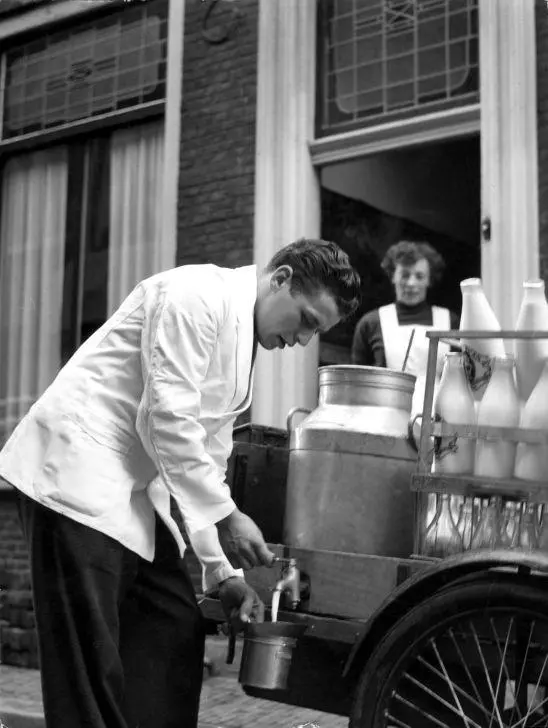
A milkman pours milk from a large churn into a customer’s jug
Doorstep milk delivery in Haarlem, 1956. Spaarnestad Photo/Nationaal Archief collection, via Wikimedia Commons · no known copyright restrictions.

From churn to bottle

Without a refrigerator, a family could store little fresh milk. The delivery man therefore often called daily.

Milk needed to reach customers quickly

Fresh milk has a short shelf life. Without refrigerators and refrigerated transport, it had to travel quickly from farm to town and be drunk as soon as possible.

The farmer came to town

Milk delivery expanded rapidly from the second half of the nineteenth century. Cities grew, and more people lived far from the farms producing their milk. Farmers, traders and milk sellers therefore brought milk to their customers.

Initially they used handcarts, dog carts, delivery bicycles and horse-drawn wagons. Some of Amsterdam’s milk even arrived by boat from Waterland, the rural area north of the city. Once in town, it was distributed among smaller carts and sold door to door.

The name milkman persisted even when the delivery worker was no longer usually a farmer. Official terms often meant milk vendor or milk retailer.

Taking a jug to the churn

Early milkmen sold milk loose. Large metal churns stood on their carts. Customers came outside with their own jug, saucepan or bucket. Using a measure, the milkman ladled or poured half a litre or a litre from the churn.

This differed from a modern shop. Milk met the open air, and the jugs were not always clean. Milk was also sometimes diluted with water or adulterated in other ways. Particularly in rapidly growing cities, better supervision became necessary.

Milk-processing establishments and dairy factories therefore appeared in the late nineteenth century. They processed, checked and distributed milk on a larger scale. Pasteurisation, standardisation and stricter rules made it safer. The milkman gradually changed from a trader supplying his own milk into a distributor of dairy-factory products.

The glass milk bottle

In the twentieth century, glass bottles became the familiar face of milk delivery. They stood in metal crates on the cart, sealed with aluminium-foil caps. Their colour often showed the contents: milk, buttermilk, yoghurt or vla, a pourable custard popular in the Netherlands.

People who were out left empty bottles outside, sometimes with a note for the next order. The milkman collected the empties and placed full bottles by the door. Bottle deposits were recorded or settled on the next bill.

Remember this?

Children smoothed the coloured aluminium caps and used them for crafts or as decorations between bicycle spokes.

A shop that came to you

The milkman soon sold much more than ordinary milk. His cart carried porridge, chocolate milk, yoghurt, cream and different custards. He often brought butter, margarine, cheese and eggs too. Customers paid immediately or had the amount written down.

The milkman followed a regular route and often knew his customers for years. He chatted, knew who was ill and noticed when a regular customer did not answer. For older people and those who rarely went out, his visit could be an important daily moment.

Behind that friendly image lay hard work. Milkmen started early, worked in all weather and continually lifted crates of glass bottles. Cleaning, loading, unloading, taking payment and keeping orders also took considerable time.
From loose milk to cartons

Changing streets

  1. Growing cities make daily milk delivery increasingly important.

  2. Glass bottles and motorised vehicles mark the milkman’s heyday.

  3. Refrigerators, milk cartons and supermarket milk sales become more common.

  4. Door-to-door delivery declines rapidly; some milkmen continue as mobile shops.

The streets became busier

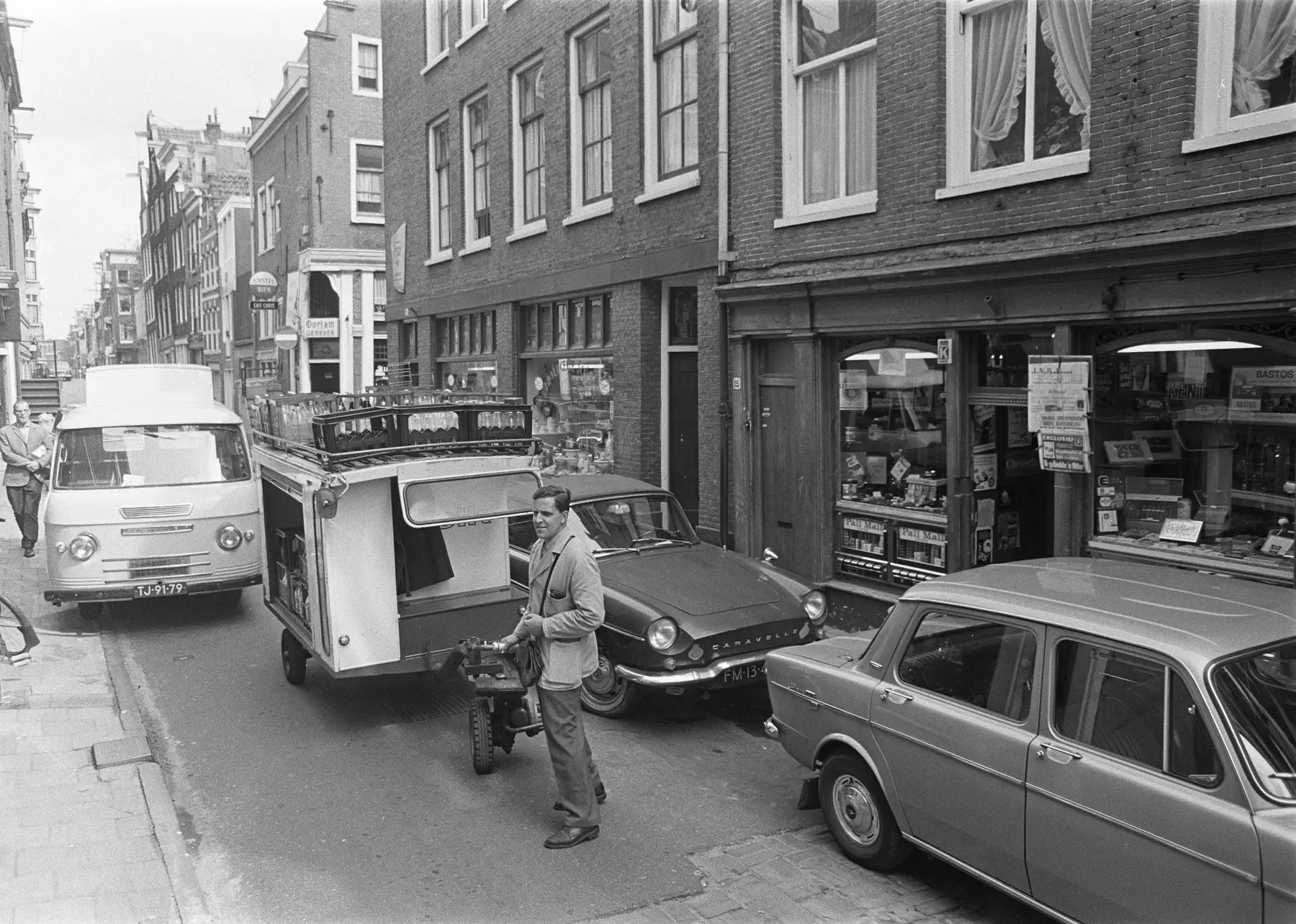
A milkman with his motorised milk vehicle among cars in a narrow Dutch street in 1967
A milkman with his vehicle in a narrow street, 1967. Photo: Jack de Nijs/Anefo, Nationaal Archief, via Wikimedia Commons · CC0.

The 1967 photograph already shows a new problem: delivery and parking became harder amid growing car traffic.

Why the milkman disappeared

Just as milk delivery became better organised, Dutch households were changing rapidly.

The refrigerator changes the household

More homes acquired refrigerators. Milk could be kept for several days, making daily delivery unnecessary. Cooling improved on farms and in factories too. Refrigerated tanks and trucks made longer-distance transport possible.

Packaging changed as well. A glass bottle was heavy and breakable, and needed returning, sorting and cleaning. A cardboard carton was lighter and could be discarded. For shops and dairies, that was much more practical.

The supermarket wins

The milkman’s strongest rival became the supermarket. When self-service shops found it easier to sell milk from the early 1960s, supermarkets and cartons quickly gained ground.

Customers could now buy milk, bread, vegetables, meat and everything else in one visit. Supermarkets operated on a larger scale and could often charge less. More households also acquired cars, making it easier to bring many groceries home together.

Refrigerator

Milk no longer needed to arrive fresh every morning.

Supermarket

All groceries could now be bought in one place.

Not everyone was home during the day

Daily life changed too. More women worked outside the home, and there was not always someone to receive the milkman. Busier streets also made driving his vehicle and finding parking harder.

Door-to-door milk delivery therefore declined particularly in the 1960s and 1970s. It did not happen everywhere at once. In some villages and neighbourhoods, milkmen continued for years.

From milkman to SRV man

Many milkmen tried to adapt. They expanded their range and turned their vehicles into small mobile shops. From 1966, the SRV vehicle became particularly familiar in the Netherlands: a supermarket on wheels that customers could enter.

The SRV man sold coffee, biscuits, vegetables, tinned food and cleaning products alongside dairy. Mobile shops remained popular for years, especially in villages and neighbourhoods far from shops. Yet they could not reverse the trend either.

Convenience from another time

Today, groceries come to the door again. We order milk, yoghurt and other products through an app, and a van may deliver them that same day. In a sense, the milkman has returned.

Yet there is an important difference. Modern drivers follow digitally planned routes and leave for the next address immediately after delivery. The old milkman knew his neighbourhood, his customers and often their stories too.

With the milkman, the street lost not just a way of shopping but also a daily sound and a familiar face.

Also at the door

For lighting, heating and cooking, the kerosene seller came down the street with his oil cart.

Read about the kerosene seller