A travelling fuel shop
The milkman brought milk and the baker bread. The kerosene seller supplied something equally essential: energy for lamps, cookers and heaters. In Dutch, this household fuel was known as petroleum.
Oil seller, oil man or kerosene vendor
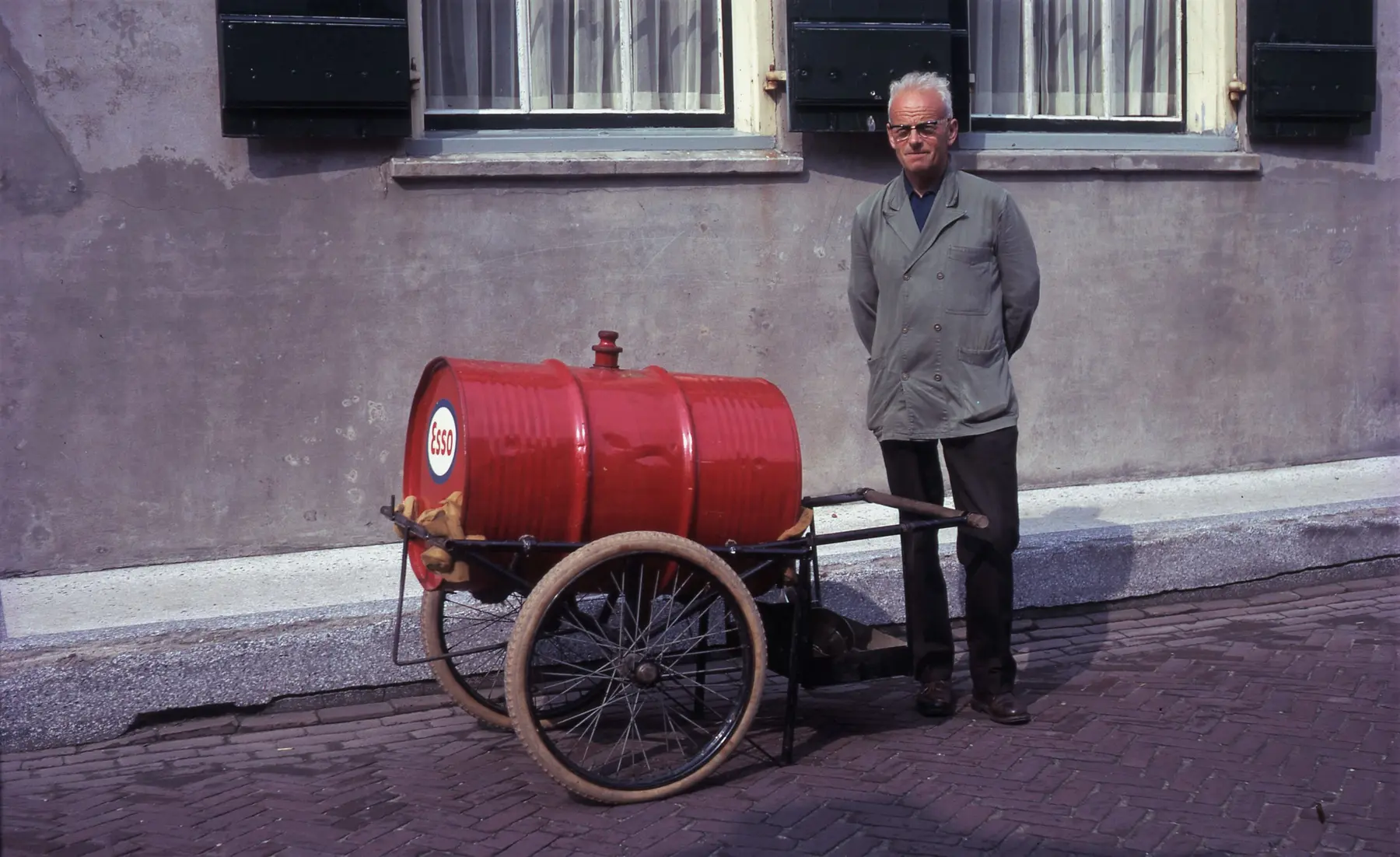
He visited regular customers with a handcart, dog cart, horse-drawn wagon or, later, sometimes a small lorry. Barrels or large cans of kerosene stood on the vehicle. The Dutch name kerosene seller was familiar, although its ending, meaning ‘farmer’, had little to do with farming. Other terms included olieman — oil man —, olieboer — oil seller — and petroleumventer — kerosene vendor — as well.
Some kerosene sellers worked independently. Others drove for an oil company or local fuel merchant. They often also sold coal, briquettes and lubricating oil, and later bottled gas.
Outside with the can
The vendor sometimes announced his arrival with a bell, shout or horn. Residents came outside with their kerosene can or had already left it beside the door. The seller dispensed the required amount and usually took immediate payment.
Fuel was not always bought months in advance. Customers purchased a few litres according to the week’s needs and available money. Four-litre cans were common for years. After the Second World War, sturdy sealable jerrycans left by Allied armies also appeared.
A few spilled drops were enough to leave hands, clothes, wood and floors smelling of kerosene for a long time. At some vendors’ premises, the whole yard smelled of oil.
From kerosene lamp to cooker
Petroleum use in the Netherlands began in 1862, when the first barrel arrived in Rotterdam from the United States. It probably contained kerosene for lighting. The kerosene lamp offered many families an affordable alternative to candles and older oil lamps.
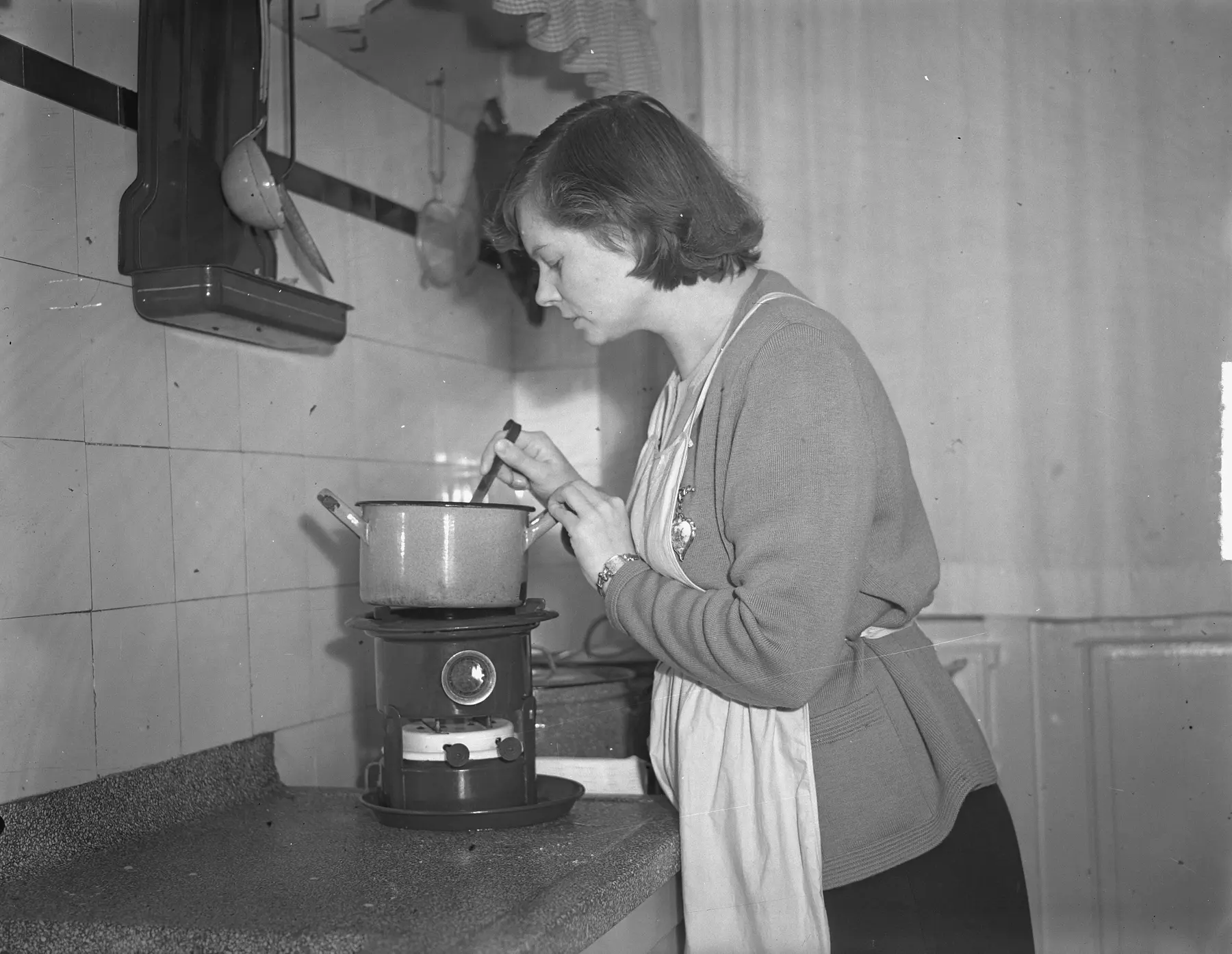
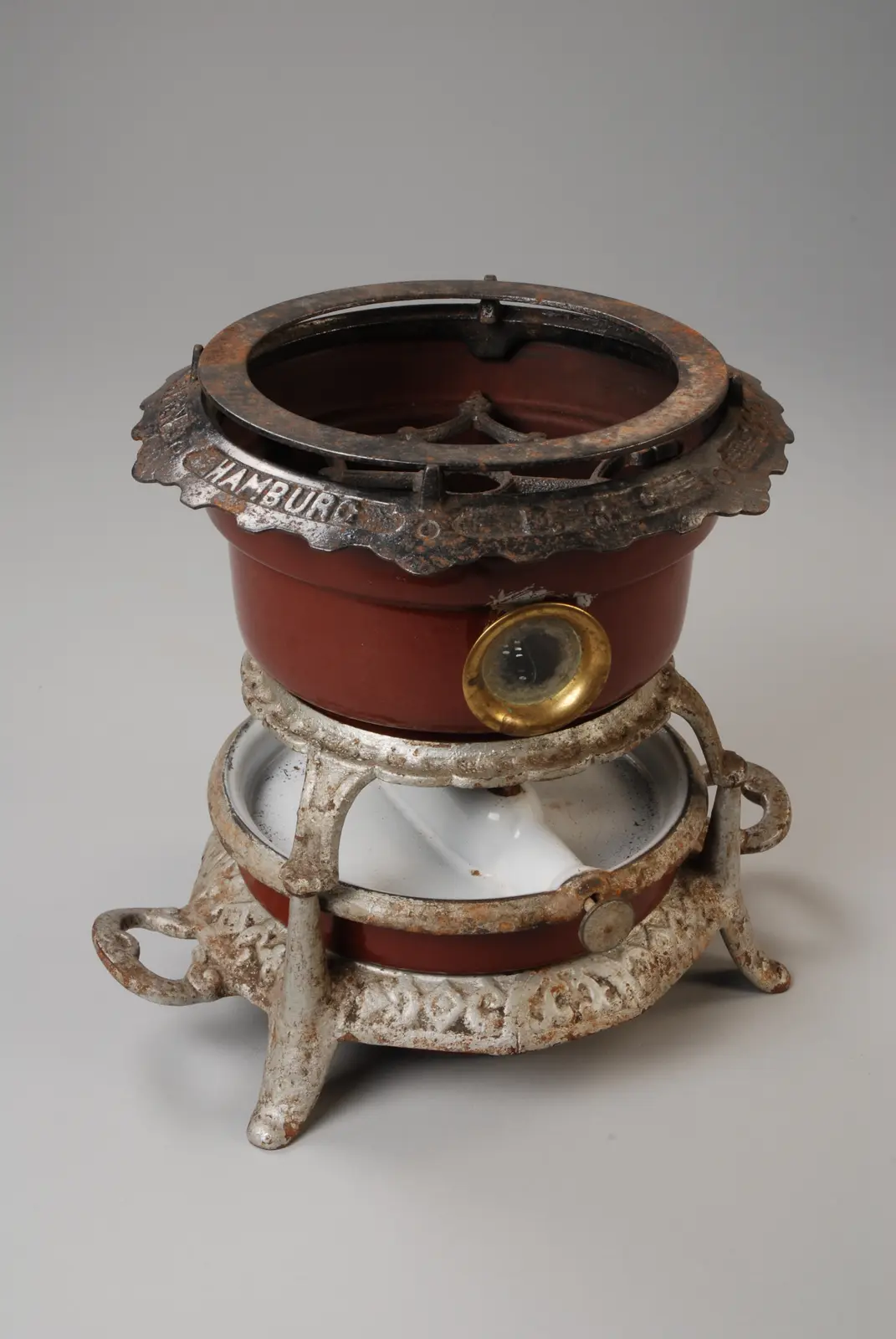
As electricity spread, kerosene gradually lost its role in lighting. It remained important for cooking and heating much longer. Kerosene cookers, also called oil stoves, stood in countless kitchens and utility rooms.
A cotton wick hanging in the reservoir absorbed kerosene. Raising or lowering it controlled the flame. The cooker particularly suited soup, porridge, Dutch onion-and-meat stew and slow-cooked beef: dishes that could simmer gently for hours. It also heated water for coffee, tea, washing dishes or the laundry boiler.
Drawbacks too
A kerosene cooker required patience. Its flame gave less immediate heat than a modern gas stove and needed careful adjustment. A wick set too high or dirty could make it smoke and blacken pans.
Kerosene heaters were popular too. They warmed rooms without a gas connection, but older models were not always safe. Tipping over, leaks and poorly ventilated rooms could present dangers.