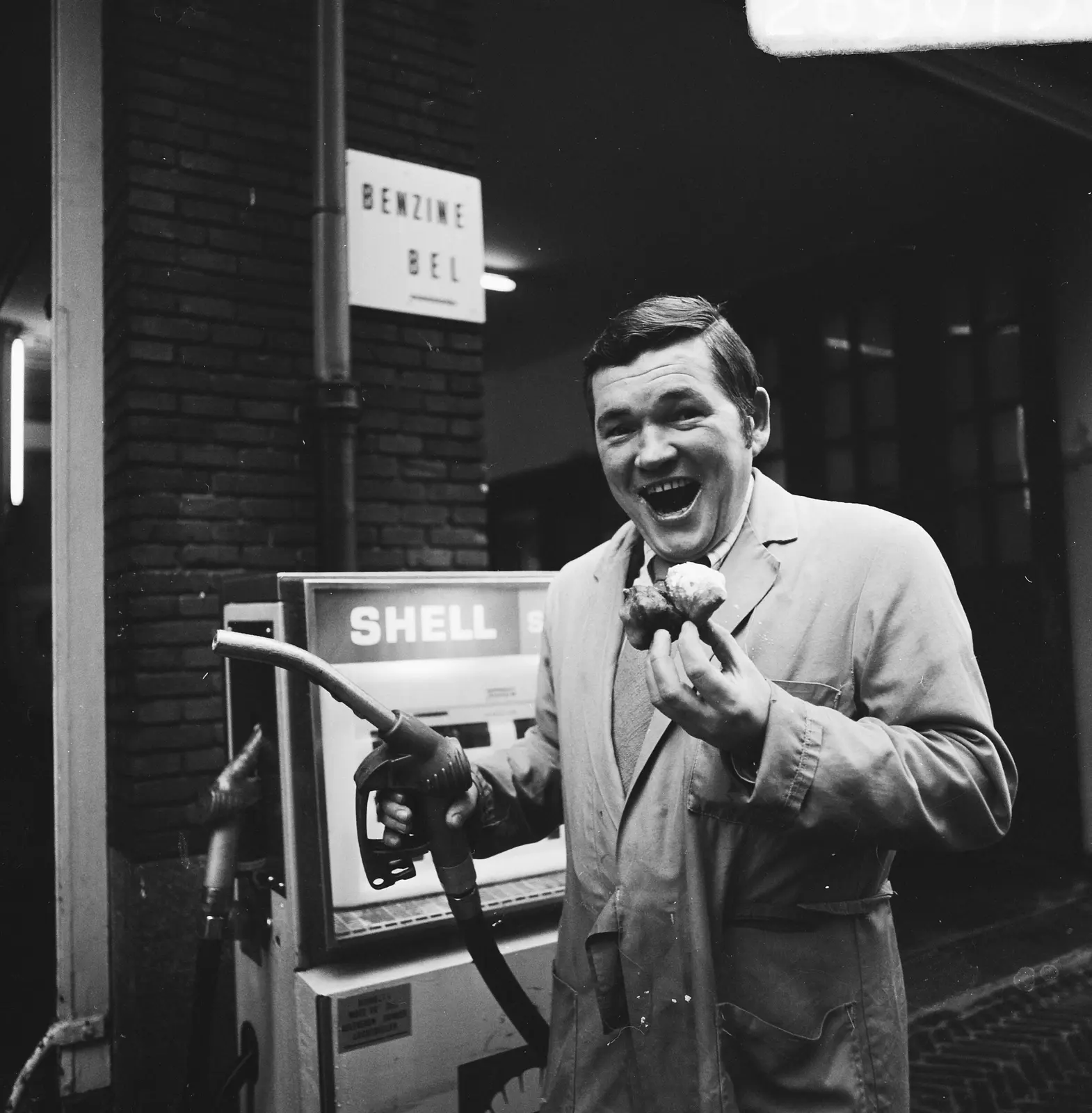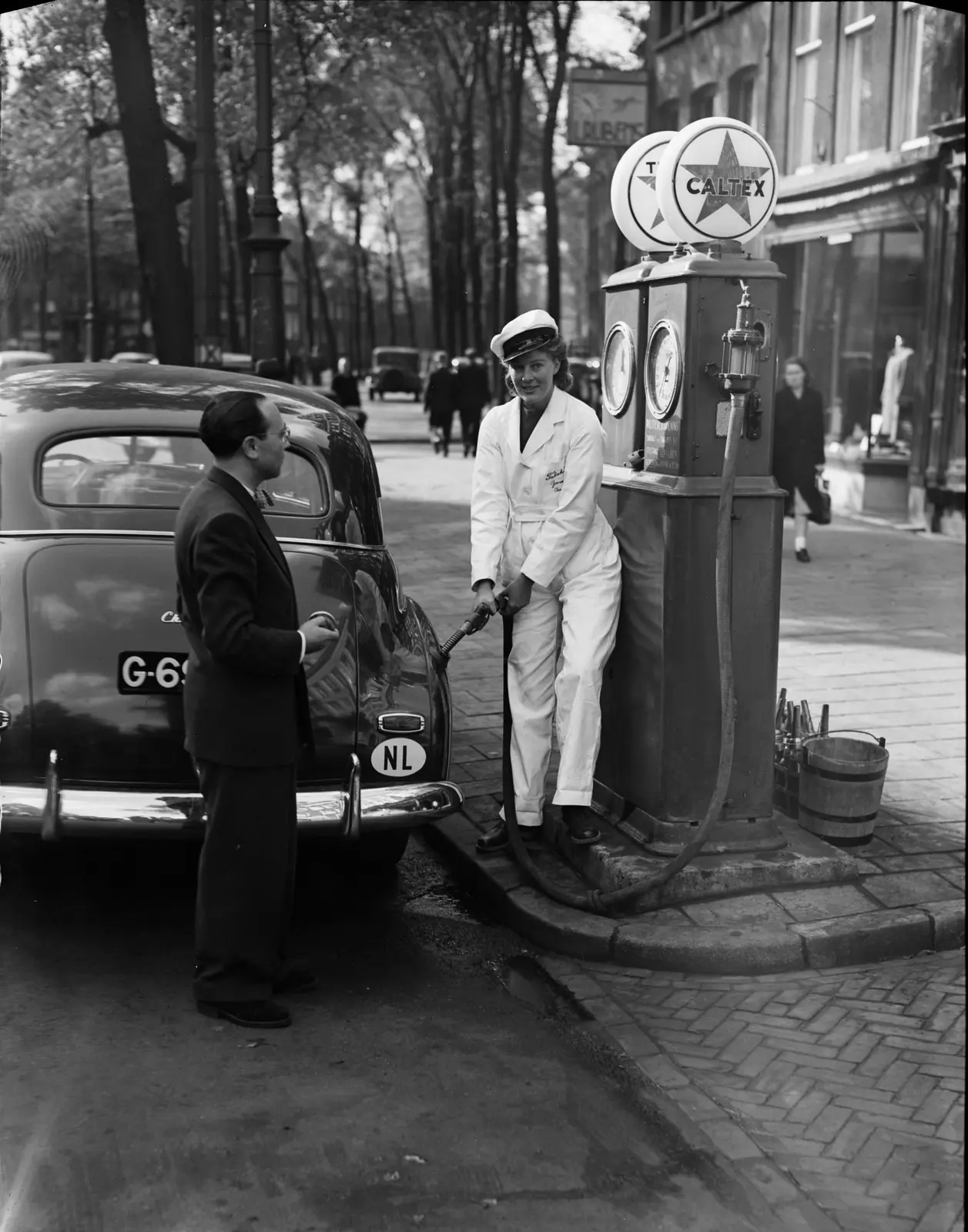
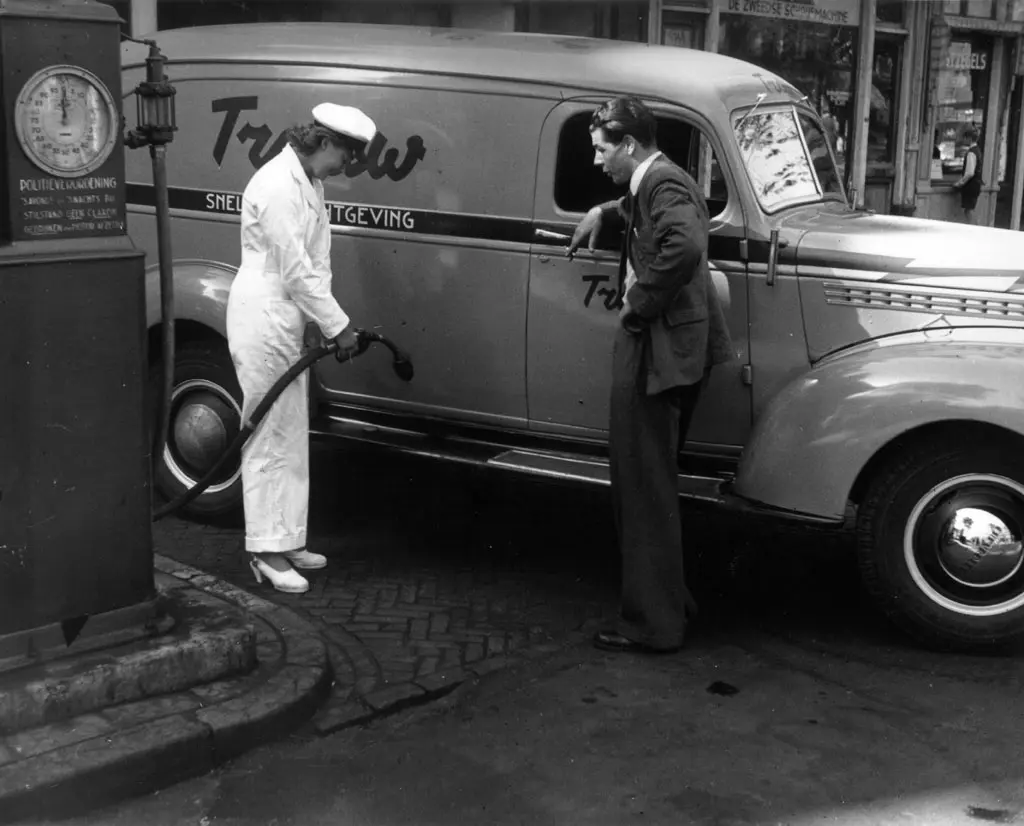
The attendant came to the car
At a Dutch petrol station, stepping out was not automatic. You pulled alongside the pump, opened the window and waited for someone to approach.
Petrol from a can
Early motorists bought fuel in cans from chemists, garages and kerosene merchants. A funnel poured it into the tank. As car numbers grew, street pumps appeared, drawing fuel directly from underground tanks.
Early pumps did not always have familiar modern meters. With ‘visible pumps’, petrol first entered a glass reservoir at the top. Customers could see how many litres were ready; the fuel then flowed through the hose to the car.
An early Dutch street pump
In 1920, one of the Netherlands’ first public street pumps was installed at Hotel Pabst in Zeist. Pumps initially stood beside garages, hotels, cafés and village blacksmiths. Dedicated filling points appeared along busy roads in the 1920s and 1930s.
An attendant belonged to this new facility. Pumps were not always technically simple, payment was cash, and customers did not need to handle fuel themselves. The attendant linked motorist, machine and cash register.
How it worked
- 1Stop beside the pump
The driver positioned the car so the hose could reach the filler opening.
- 2Name the type and amount
‘Ten guilders of regular’, ‘twenty litres of premium’, or simply: ‘Fill it up.’ The guilder was the Dutch currency before the euro.
- 3The attendant filled the tank
They reset the meter, opened the fuel cap and held the nozzle and hose.
- 4Pay in cash
Money and change often passed through the open window. Sometimes a receipt or saving stamp came with it.
More than petrol
Good service meant more than filling the tank. As the litres flowed, the attendant wiped the windscreen with a squeegee. On request, the bonnet opened for oil and coolant checks. Tyre pressure, lights or a suspicious leak might be examined too.
That brief maintenance moment was valuable. Cars needed attention more often, and many drivers did not know exactly what happened under the bonnet. Experienced attendants sometimes heard an irregular engine or noticed a soft tyre before the owner.
Remember the fuel type and amount correctly.
A clean windscreen and clear view.
Check oil and coolant.
Measure pressure and inflate if needed.
A distinctive uniform
Overalls, a work coat or jacket in Shell, Esso, Caltex or BP colours identified the attendant. A cap often completed it. The uniform should look neat, but the work was dirty and heavy: dragging hoses, checking oil, inflating tyres and standing outdoors all day.
A canopy offered some shelter, but wind, rain and winter cold remained. There were petrol fumes, exhaust and fire risks too. Car petrol also contained lead into the 1980s; its health risks received far less attention in the past.