Pictures & sound

When television had a beginning and an end

The test card, the announcer and the hours when there was simply nothing on television.

Read the story
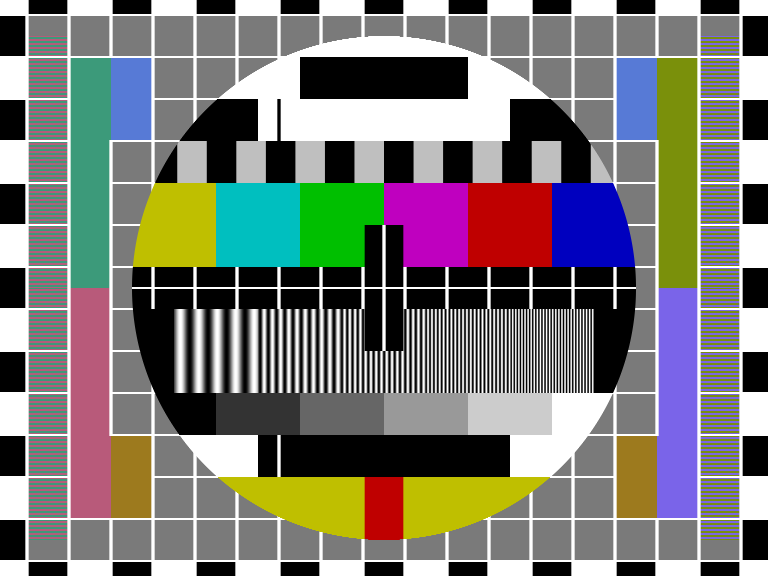
Philips PM5544 test card
Philips PM5544 test pattern — Zacabeb · public domain, via Wikimedia Commons.

There is nothing on yet

The test card was a tool for checking sharpness, geometry, brightness, contrast and later colour, rather than decoration.

At first, television was mostly absent

Switch on a television now, and a picture appears immediately. In the past, you could turn it on and discover there was simply no programme.

Official Dutch television began on 2 October 1951. There were few sets and an extremely limited schedule. Nothing was broadcast for large parts of the day. Yet a television signal might already be present. Then the test card appeared.

The Netherlands’ most famous still image

A circle, lines, blocks, grey shades and later bright colours: to millions of viewers, it mainly meant broadcasts had not begun. Technically, it was a precise tool. A circle appearing egg-shaped immediately showed incorrect picture geometry, for example.

One of the best-known colour test cards was the Philips PM5544, developed in the late 1960s. Unintentionally, such a technical pattern became one of the most recognisable images of the analogue television age.

Waiting was part of watching

Switching on too early could mean watching the test card for minutes. Sometimes a tone sounded, sometimes music. The picture also carried anticipation: it would start soon. Then came movement, a clock, a broadcaster’s logo or signature tune — and finally a face.
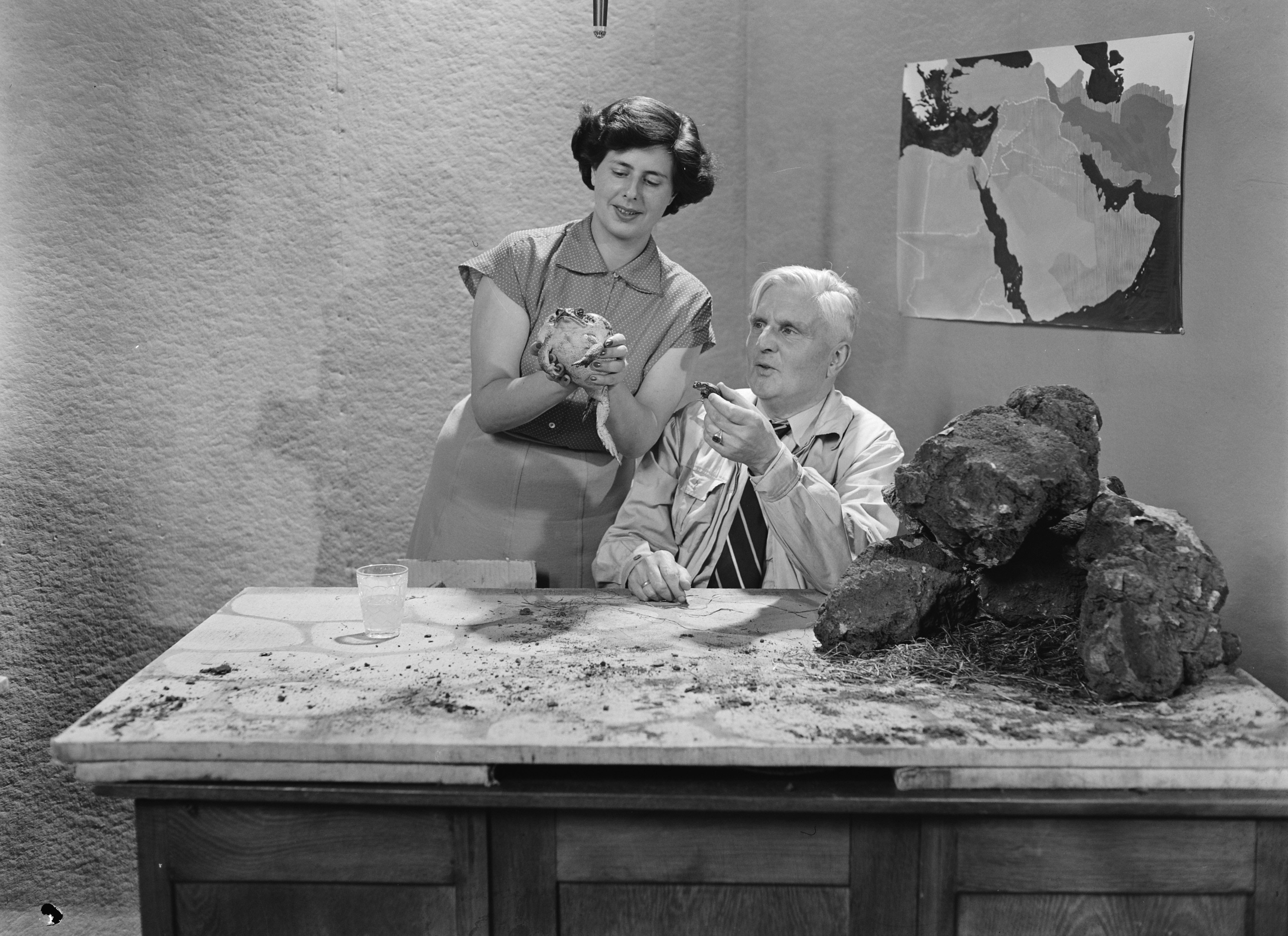
Netty Rosenfeld at the first AVRO television broadcast in 1951
Netty Rosenfeld at the first AVRO broadcast, 5 October 1951 — Harry Pot / Anefo, Nationaal Archief · CC0.

Good evening, ladies and gentlemen

The woman who entered everyone’s home

The television announcer introduced programmes, explained what was coming later and sometimes personally kept the broadcast going during technical trouble.

Live television offered little scope for hiding errors. A connection could fail, a film start late or a programme overrun. The announcer was therefore more than a friendly face: she was the human buffer between programme and technology.

She represented her broadcaster too. The Dutch system involved broadcasting associations with strong identities linked to religious or political communities. Viewers recognised voices, hairstyles and clothing and developed their favourites.

The pioneers of 1951

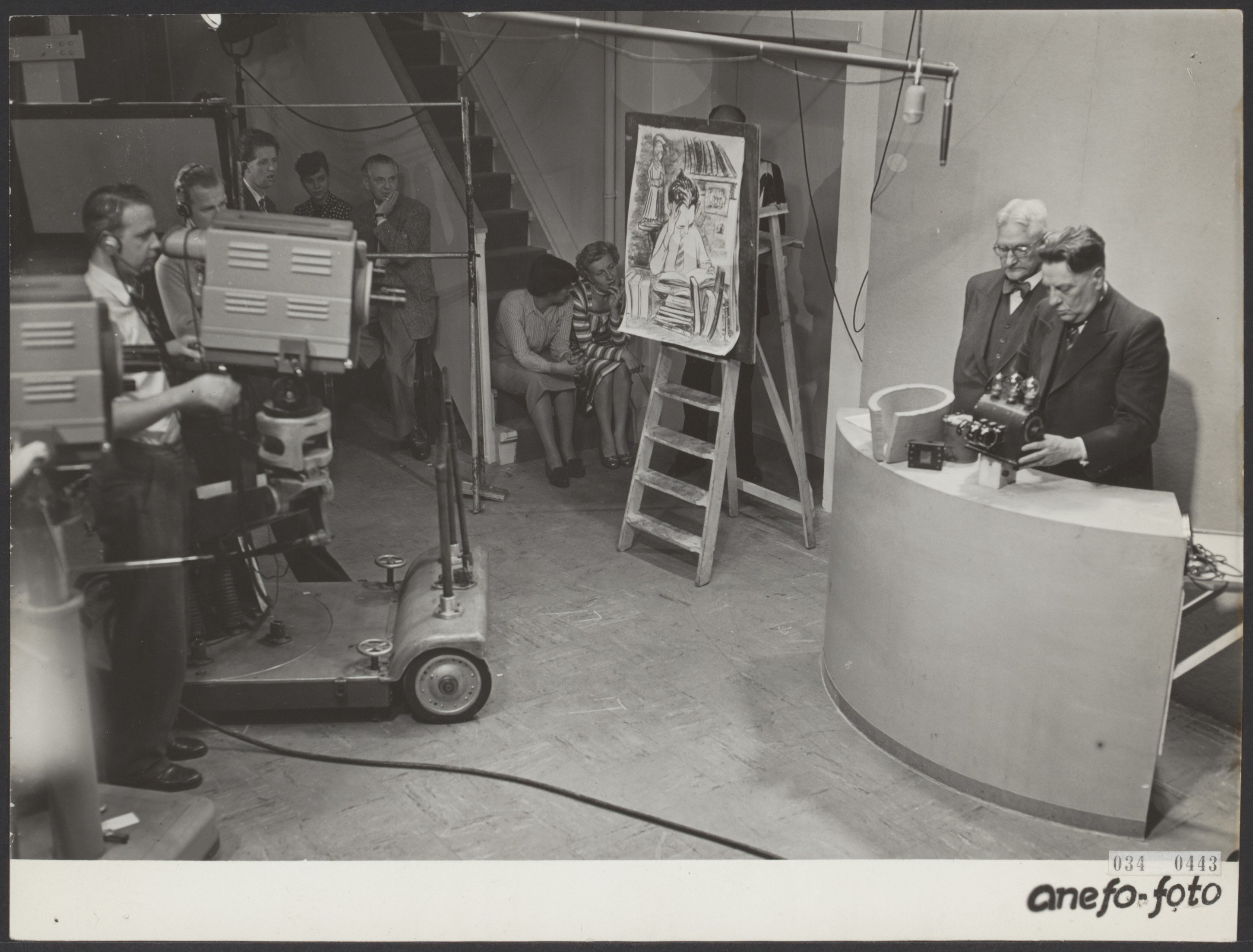
On the first official television evening, 2 October 1951, journalist Jeanne Roos introduced the broadcast. Three days later, AVRO held its first television evening, with Netty Rosenfeld as announcer. Mies Bouwman also belonged to that early generation and later became one of the Netherlands’ best-known presenters.

Television studio during the first AVRO broadcast in Bussum in 1951
First AVRO television broadcast, Bussum, 5 October 1951 — Harry Pot / Anefo, Nationaal Archief · CC0.

Update · 31 August 2026

Tanja Koen: an announcer from the very beginning

On 31 August 2026, it was announced that Tanja Koen had died on 24 August, aged 100.

Koen joined NCRV radio shortly after the Second World War. When Dutch television began in 1951, she belonged to its first generation of on-screen announcers and became NCRV’s first television announcer.

She later presented programmes herself and, in the 1980s, was a panellist on Zo vader, zo zoon — Like Father, Like Son —. Her broadcasting career spanned almost forty years. Her death marked the loss of one of the last representatives of the generation present when television in the Netherlands was entirely new.

And at night, television simply ended

After the final programme, the television evening was over. No next episode, no endless catalogue. The channel effectively closed its doors. Tomorrow was another day.

Why did test cards and announcers disappear?

Broadcasting days grew longer, more channels arrived and television eventually continued almost all night. Digital technology made the classic test card less relevant to ordinary viewers. Meanwhile, trailers, graphics, voice-overs and automated continuity took over the announcer’s role.

The test card filled the space before television began. The announcer filled the space between programmes. Once television became an uninterrupted stream, neither was needed.

What we really miss

Almost nobody probably truly wants hours without programmes back. What remains is the ritual: switching on, discovering you were early, the clock, the signature tune and someone wishing you good evening.

Television had told you it was bedtime. There was little argument with that.

Sources & image credits

KRO-NCRV — Death of Tanja Koen · Nationaal Archief — First AVRO broadcast · Wikimedia Commons for the images credited above.